Eka Pada Sana (One Foot Pose): Benefits, How to Do It
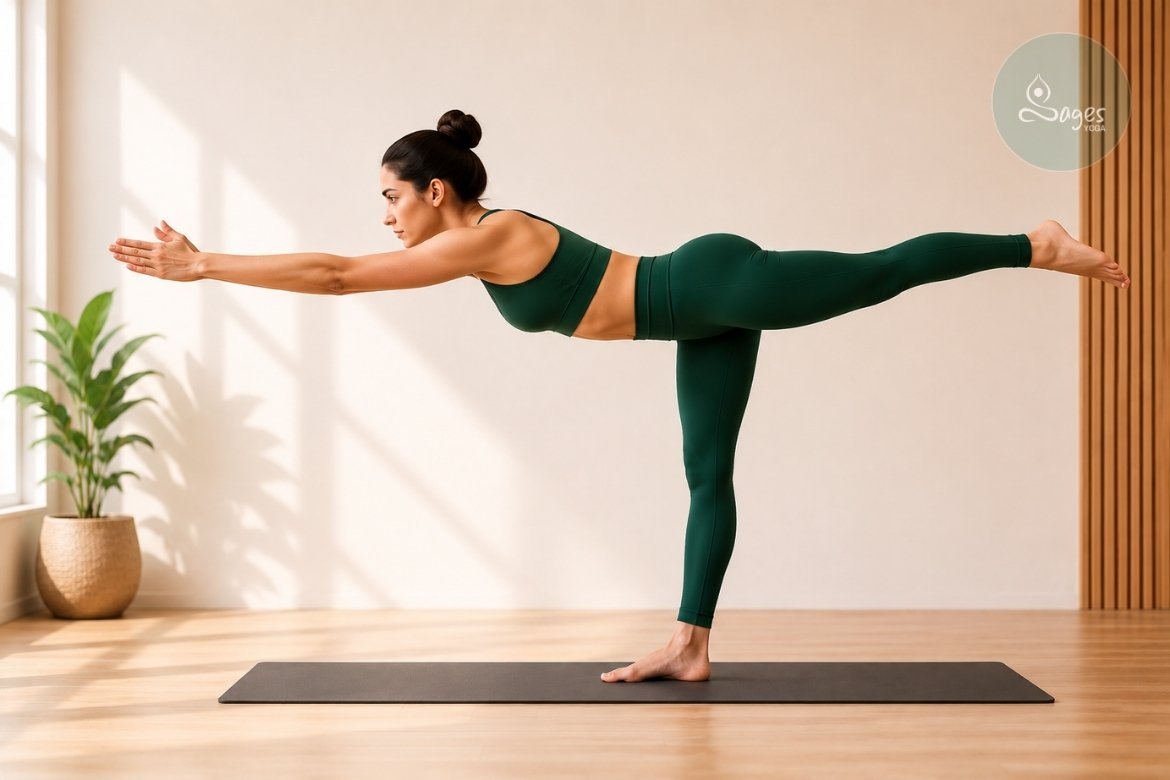
Yoga guides your body's development, helps you to grow and connect your conscious mind with your body. Many yoga postures help build strength and balance. One of these postures is Eka Pada Asana, also known as the One-Foot Pose. It does not demand that you lift yourself in knots or walk on your hands. It only requires you to stand still, extend forward, and raise one leg backwards with full consciousness and control. But the more you do it, the more you understand how the body, breath, and mind are all connected with it.
Regardless of whether you are a first-time yoga practitioner or decades into your yoga practice, learning and understanding the one foot pose, the eka padasana benefits and how to perform the pose properly can truly transform the way you live.
What is Eka Padasana Yoga?
It is a direct translation of Sanskrit. Eka means one, Pada means foot or leg, and Asana means pose or posture. Combine them, and you have the One Foot Pose - a balance position in which the body is straight and horizontal (heel of the raised leg and fingertips).
One foot pose is considered a fundamental balance pose in classical yoga. It establishes a direct physical bond between grounding energy and expanding energy (arms and raised leg).
The pose also bears a close connection to two other key postures, which practitioners often get mixed up. One of the yoga postures is called eka pada uttana padasana, which involves a one-legged posture in which the leg is lifted straight up, and the body lies flat on the back.
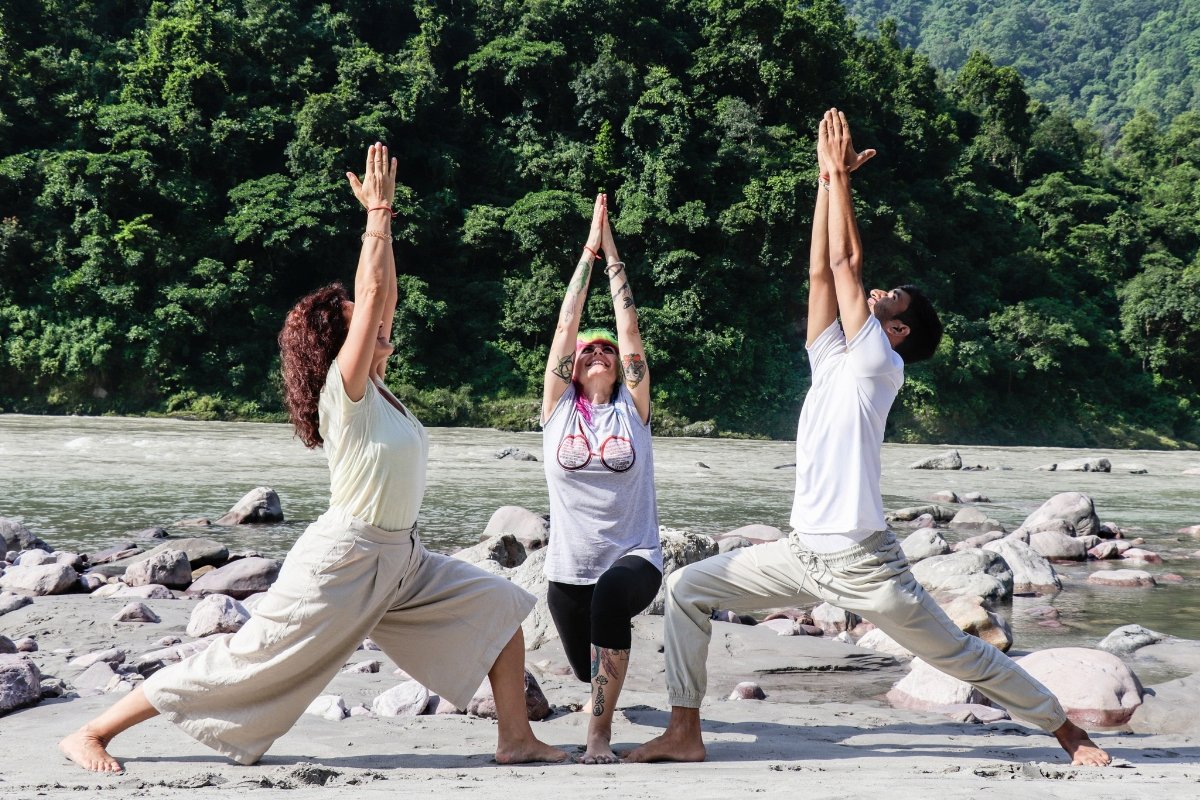
Eka pada uttana padasana is often used in therapeutic and restorative yoga. Eka pada asan, on the other hand, is a low lunge pose in which one of the legs is stretched behind. They share the same root name but differ in pose, with various actions and advantages.
The Eka Padasana Benefits In Yoga
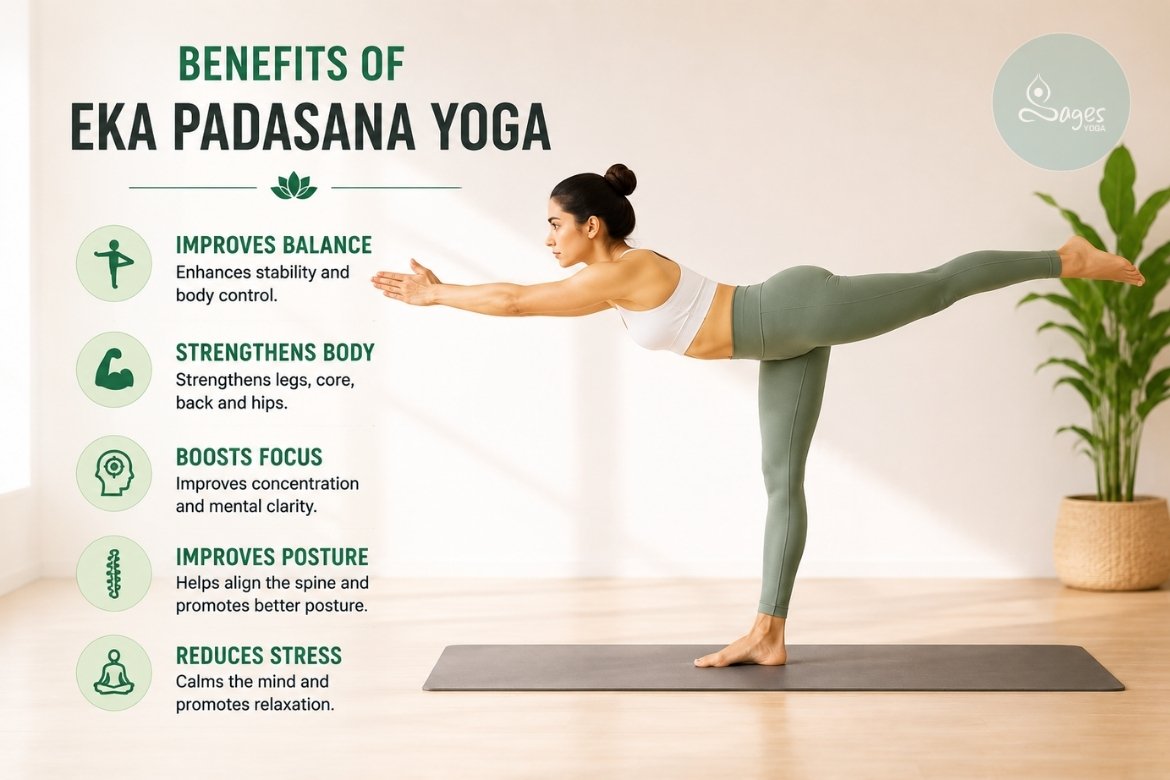
The benefits of the yoga pose far exceed helping you gain better balance. Daily practice will change your body:
1. Strengthens a Single-Leg Strength and Stability: When you stand on one leg and stretch out your entire body in a straight line, all the muscles of the leg come into play. The quads, hamstrings, glutes, and calf muscles all work together to stabilize you. Over time, they develop real functional leg strength, which is useful in day-to-day activities such as walking, ascending stairs, and lifting.
2. Makes the Core Strong: The pose requires that your core be in full play. The muscles of your abdomen, obliques, and lower back muscles are all involved in supporting your torso and raised leg, in a single straight line. It builds deep stabilizing strength in the core.
3. Strengthens the Hamstrings: As you lean forward at the hips, the hamstrings in your standing leg are stretched powerfully and strongly. Your lifted leg also uses the hip flexors, which also lengthen at the same time. This mix results in a pose that is great for anyone who spends a lot of time at their desk.
4. Enhances Spinal Alignment and Posture: Full extension of the spine, tailbone to crown, is among the most effective eka padasana posture benefits. The posture conditions your body to extend rather than to crunch, and this awareness is carried over into how you sit and stand throughout the day.
5. Grows Proprioception and Body Awareness: Proprioception is the proprioceptive sense of position in space of your body. The best way to acquire this sense is through standing balance poses like eka padasana.
Eka Pada Uttana Padasana vs. Eka Padasana: The Difference.
Different padasana are confused by many practitioners, particularly the beginners. It assists in perceiving them in comparison.
Eka padasana is a standing pose. You stand on one leg, lean forward with your torso to a horizontal angle, and stretch your arms forward or to the sides. You are shaped in a T.
In comparison, eka pada uttana padasana is performed in the lying position. You maintain the straightness of both legs, with one straight up the ceiling as the other leg remains on the ground. This variation is common in therapeutic yoga and Iyengar-based practice as a way to strengthen the lower abdomen, tighten legs, and enhance blood circulation in the pelvis.
The poses have the same Sanskrit origin, and are both used to train the body to be conscious of its one-legged action, but they are used differently and in different practice situations.
Follow the Step-by-Step Guide to Perform Eka Padasana
This pose does not require any flexibility or being advanced. You must be patient, breathe in with concentration, and stare with concentration.
1. Begin in Tadasana (Mountain Pose): Stand erectly on the top of your mat, keeping your feet together. Spread your weight on both feet. Take two or three slow, deep breaths and find your centre.
2. Fix Your Drishti (Gaze): Select a fixed point on the wall or floor in front of you and maintain your gaze on this fixed point during the pose. The sight of you is your tether.
3. Move Your Weight to One Foot: Gradually transfer all the body weight to the right foot. Firmly press the four corners of your foot on the mat. Bend your right thigh and use the muscles that surround your right knee without locking your knee.
4. Hinge Forward at the Hips: On a breath in, start to hinge forward with the joint of your right hip, not your lower back. At the same time, kick your left leg backwards. Both movements must occur simultaneously, slowly, and in a controlled manner.
5. Reach Your Arms Forward: Stretch your arms completely forward in front of you, keeping your ears uncovered, and palms face up. A long straight line, from your fingertips to your left heel, should compose your body.
6. Hold and Breathe: Then remain in the pose, breathe five or eight deep breaths. Stay straight, keep your core tight, and keep your spine straight. Do not open the left hip toward the ceiling. Maintain level hips.
7. Repeat: With an exhale, gradually, make your left leg come down, and your torso come back to Tadasana. Breathe and do the same on the other side.
Eka Pada Prasaranasana: A Related Pose to Learn
To prepare your body for eka pada asana or to deepen your understanding of one-foot-standing yoga, eka pada prasaranasana is a worthy pose to include in your sequence.
Eka pada prasar anasana involves stepping forward into a low lunge, straightening the back leg behind you, and keeping the knee lifted. Torso remains straight or slightly bent forward over the front thigh. This pose also deeply opens the hip flexors of the back leg, strengthens the front thigh, and develops body awareness that is directly transferred to improved balance in eka padasana.
Eka pada prasar anasana is a common warm-up posture we teach at Sages Yoga before progressing to work in standing balances. The lunge trains the body to work on one leg at a time, which is precisely what eka padasana requires in its standing pose.
Conclusion
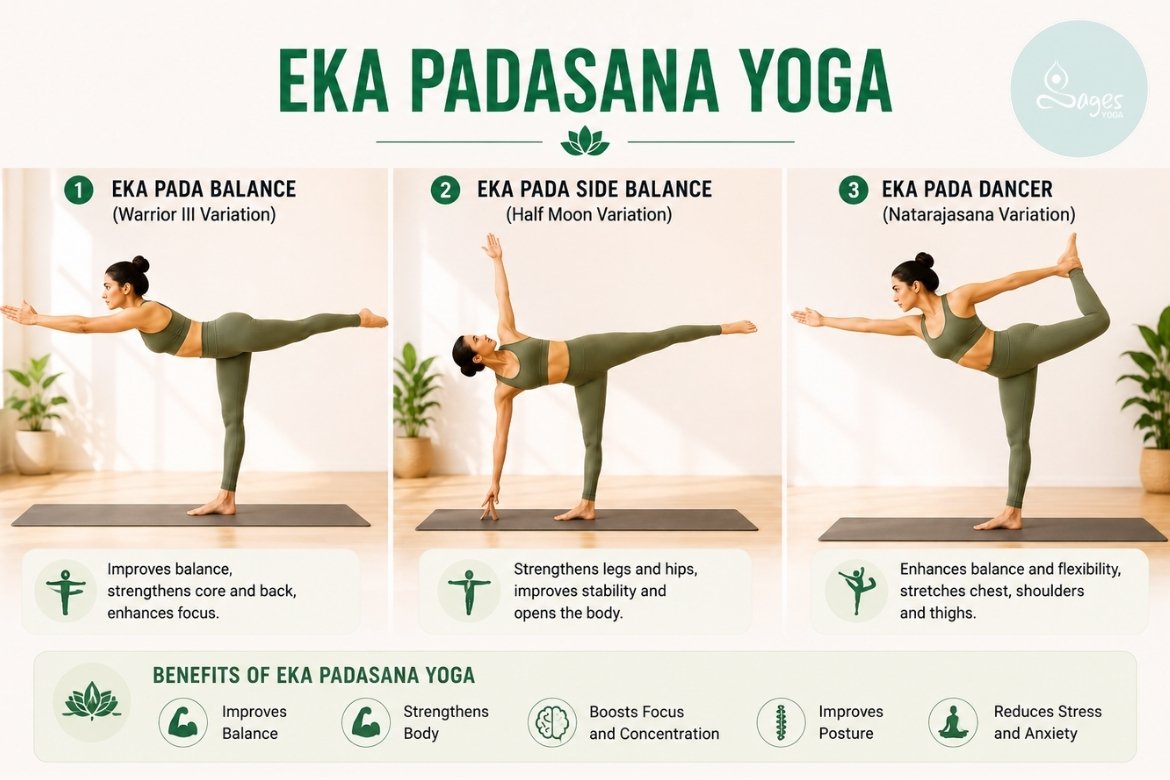
Eka padasana is one of those yoga poses that presents you with what you take to it: rush and fall. When you go up to it with your body and calm breaths, it unfolds in a way you never imagined. The eka padasana benefits stronger legs, a more stable core, better posture, increased focus, and greater body awareness, which can be experienced when you practice it intentionally over time.
This pose is part of a full standing balance series in Sages Yoga, as we have observed many times, it changes the bodies and minds of those who practice it on all levels. Starting with eka pada uttana padasana to warm up, then jumping right into the full standing pose, all versions of this pose teach you the same thing.
Frequently Asked Questions
Is it possible for beginners to practice eka padasana?
Yes, for beginners, eka padasana may be practised against the wall or a chair. Hinge forward with one hand lightly resting on a wall, then lift the leg. Concentrate more on form than on duration, and build strength slowly before trying the full, unsupported one.
How much time do I need to hold eka padasana?
Novices are advised to take three to five breaths on each side. You can slowly increase to eight to ten breaths with practice. It is more important to maintain quality alignment than to focus on the amount of time you spend in the pose.
What is the difference between eka padasana and eka pada uttana padasana?
Eka pada asana is a standing balance pose in which you bend forward and lengthen the leg at the back. Eka pada uttana padasana is a supine pose that is performed in the lying position with one leg extending vertically towards the ceiling. They both train single-leg awareness, but they serve different purposes.
Does Eka Padasana treat lower back pain?
Practised correctly, yes. The posture trains the lower back and trains the appropriate hip-hinge. Nonetheless, individuals with acute back injuries ought to seek the advice of a yoga teacher or a physician before trying it.
What is the relationship between eka pada prasaranasana and eka padasana?
Eka pada prasaranasana is a low lunge that opens the hip flexors and strengthens the single leg. It serves as a warm-up to eka pada asana, warming the hips and legs for the more challenging requirements of the standing balance pose.
Categories
Our Popular Yoga Courses
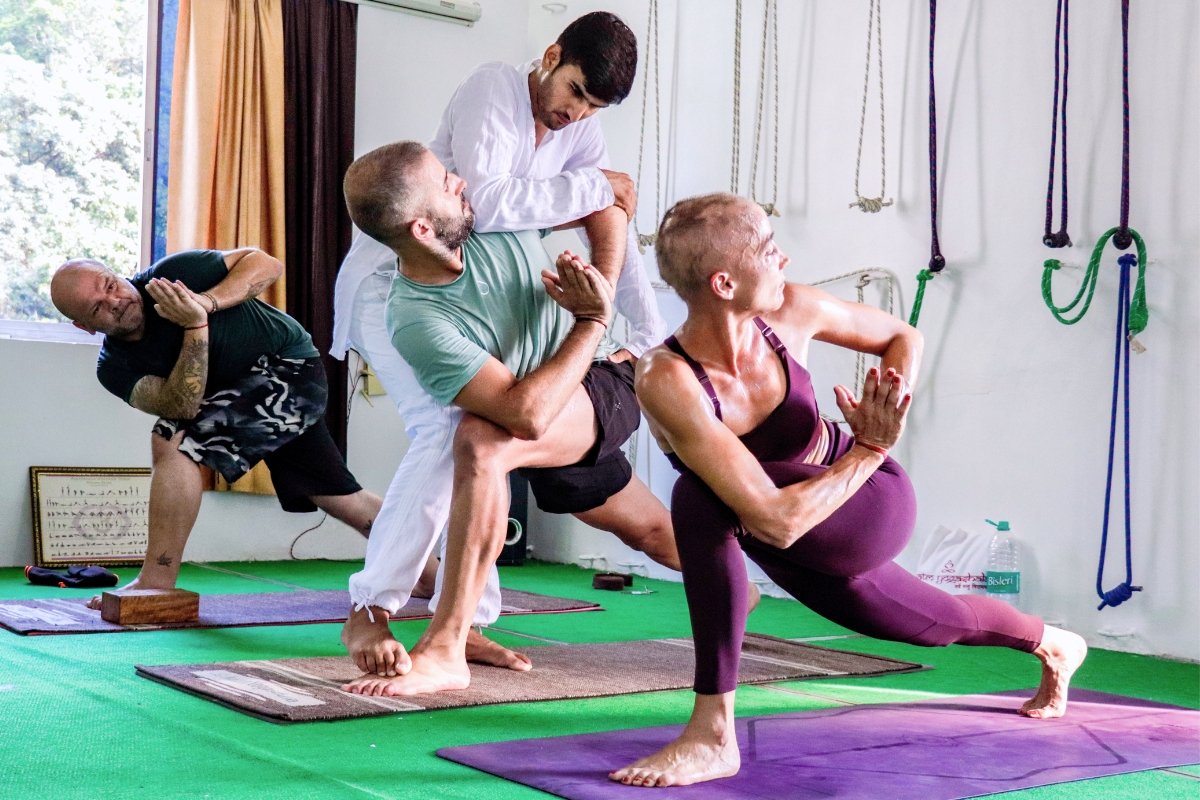
Yoga Teacher Training Courses in Rishikesh, India
Join our Yoga Alliance certified 100 to 500 Hour Yoga Teacher Training in Rishikesh — the Yoga Capital of the World. Learn from expert Indian gurus.
200 Hour Yoga Teacher Training in Rishikesh
Yoga Alliance certified TTC for students who want to become professional yoga teachers.