Cross Legged Yoga Pose (Asanas): Benefits, Steps & Variation
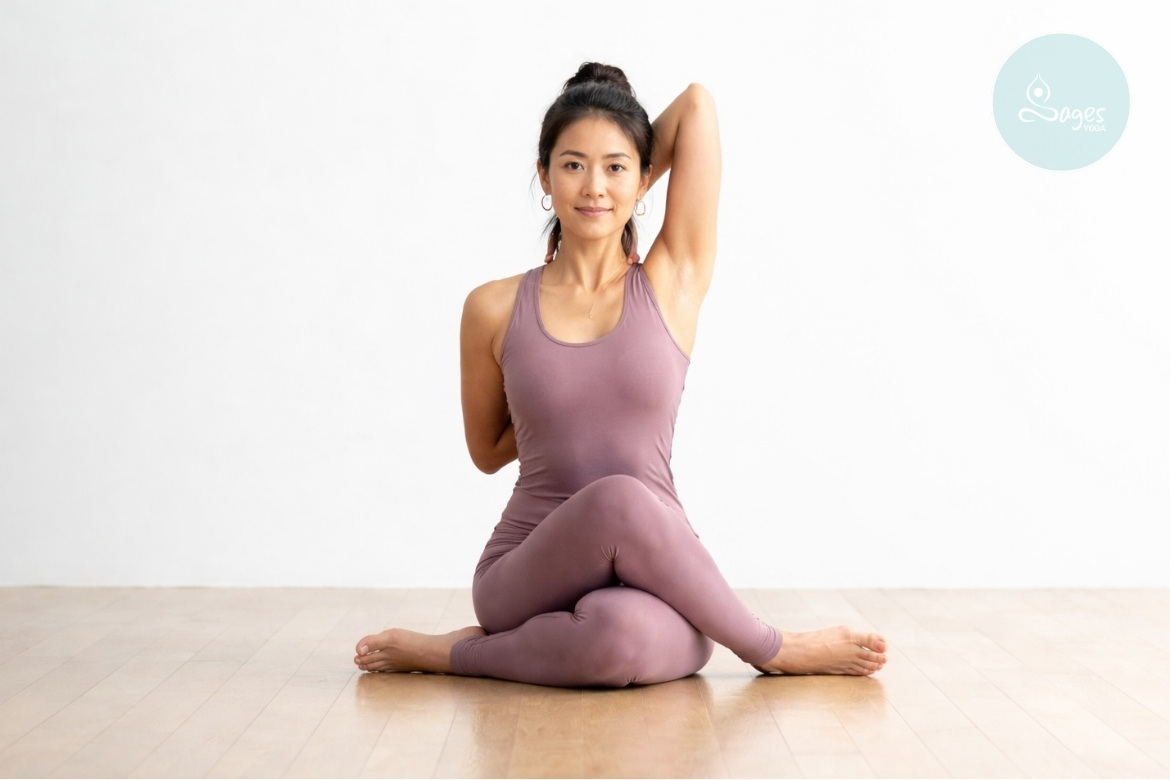
The most basic thing to always remember is that a crossed leg position can make the greatest difference in your life. Your breath is more profound, your mind is calmer, and your body begins to align internally when your hips open and your spine stretches. Although cross-legged yoga poses might appear easy, they tighten the lower body, able you to release emotional strains, and set you up for more serious meditation. Cross legged yoga position helps improve focus and posture during meditation.
These will assist in making you feel more grounded, clear your mind and get your body prepared to be still. Cross-legged postures will enable you to achieve inner balance, whether to improve your posture, be more flexible, or clear your mind. In this post, you will learn about five strong crossed-leg poses and their benefits. The cross legs pose is commonly used in yoga and mindfulness practices.
Best Cross Legged Poses and their Advantages
Let’s learn about the best cross-legged positions that will benefit you in the long run.
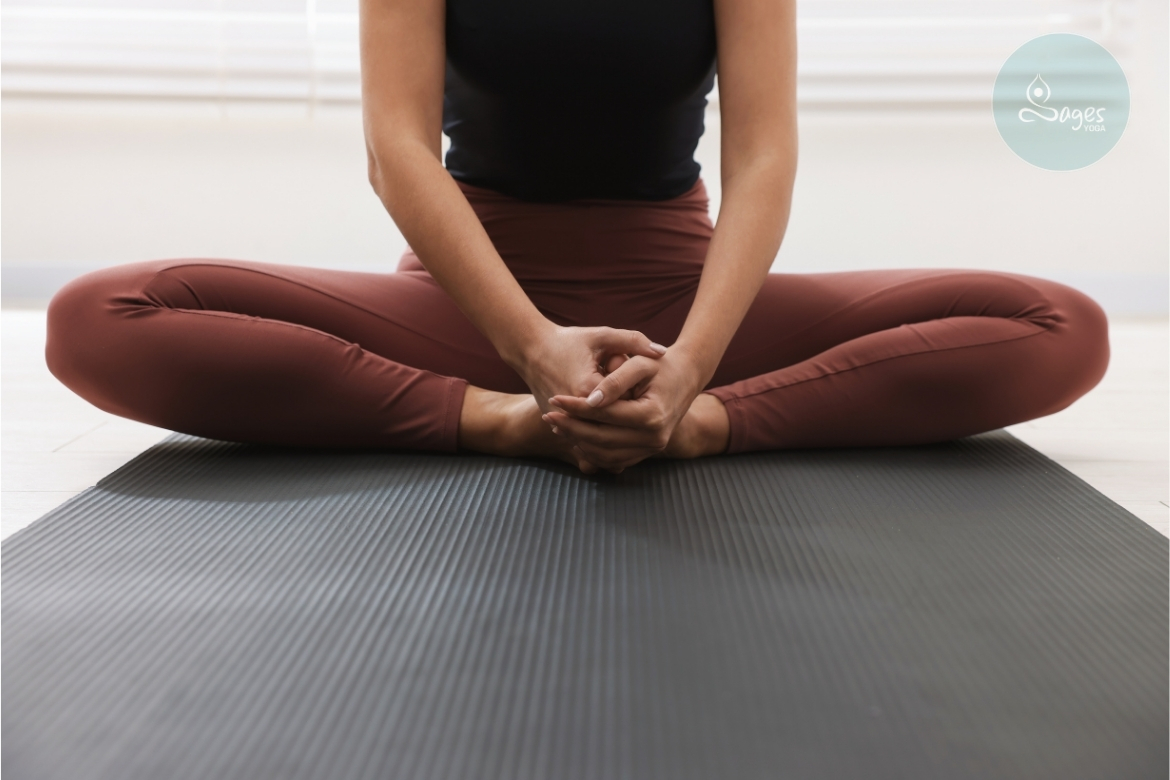
1. Sukhasana (Easy Pose)
The first basic seated yoga is called Sukhasana or Easy Pose. It is easy to foresee and yet needs to be aligned and present. Sitting in a seated cross-legged position can feel calm and grounding.
Steps to follow:-
- Sit with your legs spread out before you.
- Cross the shins over each other without piling them on top of each other.
- Permission of knees to fall sideways.
- Sit up so that the spine is straight.
- Kneel with your hands on your knees or thighs.
Benefits of Sukhasana:-
- Helps to maintain a relaxed yet alert posture.
- Lessen anxiety and agitation of the mind.
- Open hips slowly and gradually.
- Perfect when you are starting or need some long meditations. The legs over head position yoga pose requires flexibility and practice.
2. Padmasana (Lotus Pose)
One of the most identifiable seated yogic poses is Padmasana. It can frequently be applied during high-level meditation and breathwork. Nonetheless, it should be very flexible and patient. Many people feel relaxed when sitting on crossed legs on the floor.
Steps to follow:
- Begin sitting with legs spread out.
- Using the left thigh, bend the right knee, and bring the foot over it.
- To do it, bend the left knee, placing a foot on the right thigh.
- Aim to ensure that both legs are as close to the floor as the spine is straight.
- Knees: just sit with hands on jnana knees.
Benefits of Padmasana:
- Enriches meditation with the stabilisation of the body.
- Activates the spinal column, stimulates the pelvis, spine, abdomen, and bladder.
- Stimulates the best positioning of pranayama.
- Activates the chakras, particularly the root and crown. Why do people cross their legs is often linked to comfort or habit.
3. Ardha Padmasana (Half Lotus Pose)
A simpler form of Lotus Pose is Ardha Padmasana. It offers a lot of Padmasana benefits and can support less hip range of hip movement. It serves as an appropriate pose for those practitioners who are on their way to Lotus.
Steps to follow:
- Sit with legs outstretched.
- Bend the right leg and put the foot on the thigh.
- Bend the left leg below the right knee.
- Hold back the spine and shoulders.
Benefits of Ardha Padmasana:
- A lighter variant of the lotus.
- Fosters the use of pelvis and spine stability.
- Makes the body more ready for greater states of meditation.
- Promotes respiration control and concentration. The benefits of sitting cross legged include better posture and flexibility.
4. Agnistambhasana (Fire log Pose)
An intense pose that stretches the hips is called agnistambhasana. It is fantastic to relieve tension in the outer hips and the butt, in particular, for people who sit a lot or even in the sporting field. It requires, on the one hand, the ability to change and be conscious.
Steps to follow:
- Sit with legs out.
- Bend a knee and place the shin at the same level as the mat.
- Still, with the other shin right on top of, ankle over knee, knee over ankle.
- Bend knees to ensure the protection of the knees.
- Sit erectly and bend forward, if comfortable. Crossing legs while standing can sometimes show nervousness or ease.
Benefits of Agnistambhasana:
- Profoundly opens hips and buttocks.
- Brings out appetite and the stomach organs.
- Grows patients and can lead to the discharge of accumulated emotional stress.
- Makes the body more open to seated meditation.
5. Siddhasana (Accomplished Pose)
Siddhasana has been honoured as the seat of yoga in the yogic scriptures as the seat of accomplishment. It comprises the two extremes of the body and triggers spiritual energy when it is practised regularly.
Steps to follow:
- Sit with legs extended.
- Fold one leg, with the proximity to the perineum.
- At the point of the genitals, place the second heel above the first one.
- Both knees bent and spine upright.
- Hands on the knees in a relaxed mudra.
Benefits of Siddhasana:
- Considered to have spiritual meaning.
- Theory of preserving and directing energy during pranayama.
- Relaxes the nervous system and puts the body on its feet.
- It is believed traditionally to harmonize left and right channels of energy (ida and pingala).
6. Gomukhasana (Cow Face Pose, Seated Variation)
Combines flexibility of both the upper and lower body. The sitting one opens up the hips, and the complete pose also involves the shoulder and triceps stretches. It aids in reestablishing the postures.
Steps to follow:
- Sit with legs stretched out.
- Combine the knees and place them on top of each other.
- Draw your feet at the periphery of your hips.
- Keep your knees between your heels.
Benefits of Gomukhasana:
- Opens hips, thighs, and ankles.
- Freezes up tight shoulders and upper back.
- Promotes spinal complement and foundation.
- Enhances concentration by making the body's senses more conscious.
Precautions for Crossed-Leg Yoga Poses
The following are the precautions for practising the crossed leg yoga pose:
1. Never Force the Knees
The knees are hinge joints, which do not twist. Every rotation should be done using the hips rather than the knees. When the knee in any area experiences strain, pinching, or pain, leave it at once. The cross legs meaning often relates to comfort or relaxation.
- Sit on the support in case of tight hips.
- When your knees are raised off the ground, or the arch of your back is hollowed.
- Sit on a blanket, bolster, or yoga block.
- This raises the hips and lessens the knee pressure.
- Being comfortable is not cheating; it’s smart practice.
2. Have a straight, upright spine
Neither hunching nor arching up
- Lengthen the spine upward
- Shoulders relaxed out of the ears.
- Chin is parallel to the floor.
Suggestion: The strains of the hip and knee with time are greater in a collapsed spine.
3. Do Not Do These Poses When You Have Some Conditions
Should not practice crossed-leg poses (or do so with supervision) when you have:
- New knee trauma/surgery.
- Meniscus tears
- Joint severe arthritis (hips or knees)
- High-grade varicose veins (long holds)
Don’t forget to change or have other options (such as Chair Sitting or Vajrasana). To meditate, many people prefer to sit with legs folded on a mat.
4. Warm Up Before Sitting
- Hip circles
- Butterfly (Baddha Konasana) pose.
- Gentle hamstring stretches
- Cat-Cow for spinal mobility
This prepares the hips to be able to rotate safely.
5. Keep Both Knees Supported
- If knees hover in the air.
- Curve blocks or cushions under the knees.
- This helps in avoiding strain on the ligament and helps in relaxation.
6. Do not have Long Holds in the Fancy
Beginners should:
- Start with 1–3 minutes
- Progressively prolonged length.
Anaesthetic, pins and needles or loss of circulation, it is time to unleash.
7. Breathe Naturally- Never Hold Your Breath
Strain usually manifests itself as breath-holding.
- Breathe with ease and smoothness.
- In case the breath is too shallow, relax the posture.
8. Exit the Pose Slowly
After sitting:
- Gently straighten legs
- Shake them out
- Massage knees if needed
Unpredicted actions may put pressure on joints and nerves. There are numerous advantages of practising the Cross Legged Pose, that are, to name a few. The Cross Legged Pose presents several benefits, both physical, mental and energetic. It can serve as a practice in good posture, lessen the stress, and bring one closer to the present when practised properly.
Also Go Through:- Plank Dolphin Yoga Position
Physical Benefits of Cross Legged Yoga Pose
The multiple physical benefits you can avail while you sit with crossed legs.
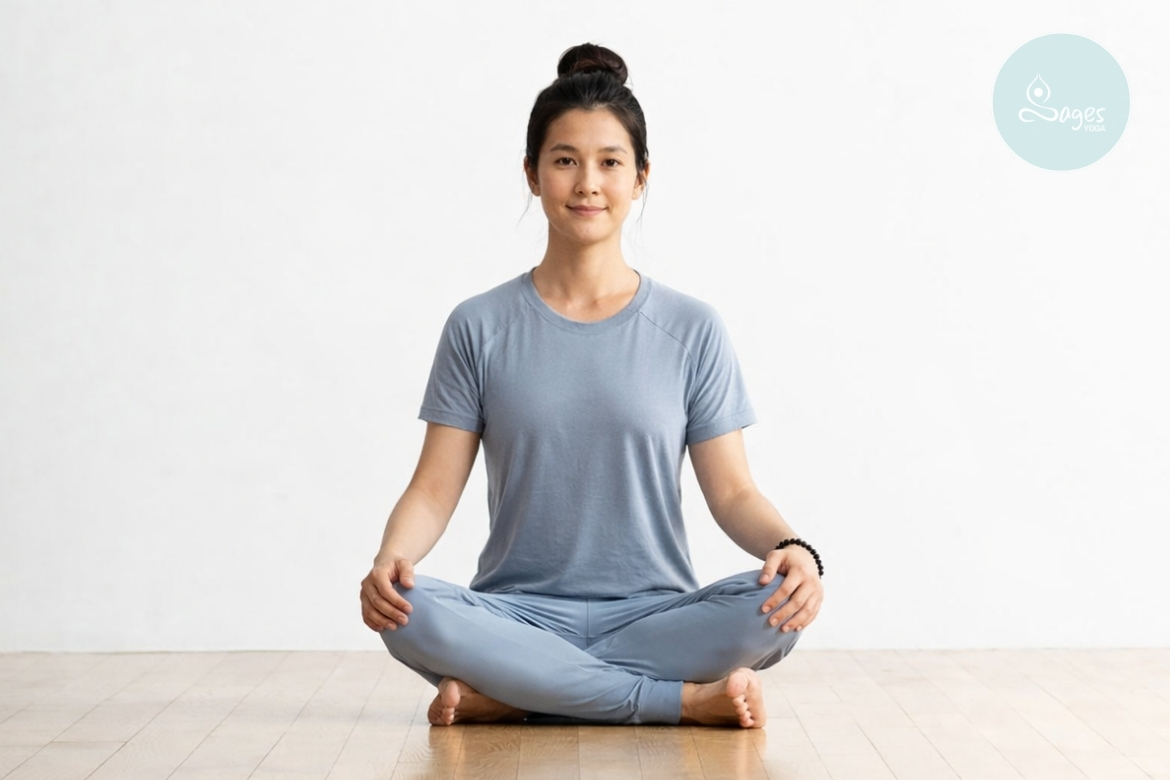
- Better Posture and Core Workout:- The Cross Legged Pose enhances the correct posture due to the fact that the spine is placed in its natural position. The abdominal muscles work to provide support to the spine. This assists in alleviating tension in the neck and shoulders.
- Opens Hips and Enhances Lower Body Flexibility:-This seated pose offers an intense but tender range to the hip joints, thighs, knees, and ankles. As the practice is continued, the joint becomes more mobile, and muscles become so relaxed with time.
- Good In Spinal Health:- Sitting in Cross Legged Pose with a straight spine brings about decompression that releases tension in the lower back, and body weight is evenly distributed between both sitting bones.
- Stimulates Digestion:- This sitting, either directly after a meal, will stimulate digestion by decreasing abdominal compression and providing space where light, gentle peristalsis will be produced.
Mental and Emotional Benefits
The multiple mental benefits of cross legged yoga are;
- Enhances Concentration:- This pose, in comparison to other seated postures, helps the mind to relax. The Cross Legged Pose is optimal in order to minimize distractions to physical movement. It also seeks to sit with the meditation techniques, such as better focus, clarity of mind and being in the present.
- Lowers Concerns:- The crossed leg pose, coupled with slow and deep breathing, triggers the parasympathetic nervous system. This assists in shutting down the fight or flight mode.
- Strengthens Endurance:- With time, you will be able to gain patience and endurance through the posture. In this posture, one can have a chance to establish the attentional length and control emotionality.
Energetic and Spiritual Benefits
- Getting into Earth Energy by the Root Chakra:- In the yoga philosophy, when you sit in the cross-legged position, you are boosting and activating the Muladhara (root chakra). This can create a feeling of security, safety, stability and rootedness.
- Allowing Energy to Rise through the Spine:- With a straight spine, the sushumna nadi is reached, and the deeper meditative and spiritual experiences can be experienced.
- Allows Breath Work and Pranayama:- The crossed-leg yoga pose provides the body with stability to remain straight with the chest open and straight spine to be able to breathe deeply with the diaphragm.
Vitality Enrichment
- The Root chakra (or accessing the energy of the earth):-Sitting cross-legged according to yogic philosophy helps to increase and arouse the Muladhara (root chakra). This can also provide a feeling of safety, security, stability and rootedness. The possibility of being able to enter deeper levels of meditation and spirituality, that is, letting the energy move through the spine: With a straight spine, one is able to reach the sushumna nadi.
- Permits Breath Work and Pranayama:- The cross-legged yoga position is a ground-level posture in order to remain straight with an open chest and a straight spine to enable deep breathing with the diaphragm.
Common Challenges and Effective Solutions
The Cross Legged Pose has certain physical and postural difficulties, particularly to those who have not practised it before. Early correction of these problems will mean that you are comfortable in the pose and can work longer.
1. Knee or Hip Pain
Have cushions at the knees. Sit on a prop that is higher to decrease the strain on hips. Do hip-opening yoga each day.
2. Numbness or Tingling in Legs
Solution:- Do not sit long. Cross your legs, uncross your legs. Massage your legs after your session.
3. Slouching or Curved Spine
Solution:- Work lightly on your core and sit in a posture. Think about sitting close to a wall to support a neutral spine. Sitting bones could be tilted forward with props placed underneath the sit bones.
4. Asymmetric Cross of Legs
Alternate crossing of legs each time. Check with a mirror or have one of your teachers make sure you do it symmetrically. Keep balance in leg stretches on either side.
You May Also Like:- Top 7 Best Yoga Asanas for Throat Chakra
Conclusion
Seating yourself so comfortably on the floor in this cross-legged position will redirect you into the world of meditation. Irrespective of the difficulties you have with your posture, lungs and attention, you can make use of a simple sitting spot in your practice. The Cross Legged Pose is a style of returning home, whether you are meditating, reflecting or having some mindful time. Incorporate it as a habit. In due course, you might have to learn that peace is not something that you have to go and find; it is something that you are just sitting with day in, day out.
Frequently Asked Questions
What are cross-legged yoga postures?
Yoga sitting in which legs are crossed is known as a cross-legged pose. They are often employed in the process of meditation, respiratory activities and during light stretches.
What are the advantages of sitting down poses?
These will help in bettering flexibility, opening up the hips, strengthening the spine, improving posture, and relaxing the mind. They also facilitate the enhancement of focus in the process of meditation.
Can cross-legged poses be used with beginners?
No, beginners can learn cross-legged poses. The sitting can be easier with the use of some props, such as cushions or blankets.
What is the length of time to remain in cross-legged posture?
Begin with 1-5 minutes and slowly increase the time as one becomes more comfortable and able to do it. Strain should also be avoided as one listens to the body.
Categories
Our Popular Yoga Courses
Yoga Teacher Training Courses in Rishikesh, India
Join our Yoga Alliance certified 100 to 500 Hour Yoga Teacher Training in Rishikesh — the Yoga Capital of the World. Learn from expert Indian gurus.
200 Hour Yoga Teacher Training in Rishikesh
Yoga Alliance certified TTC for students who want to become professional yoga teachers.