04 Powerful Mudras to Reduce Anxiety Naturally
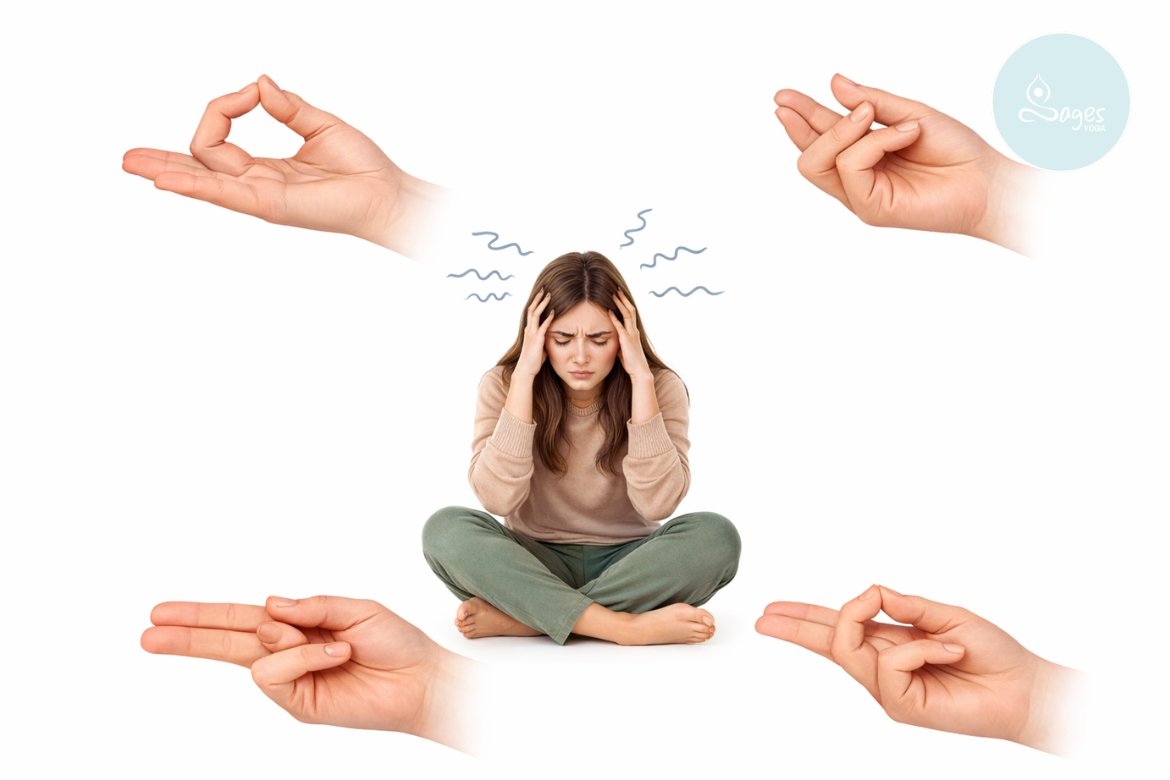
One of the problems that has become very common in the modern world of fast progress is anxiety and stress. Life and its continuous pressures and demands may leave us anxious, nervous, and overwhelmed. Nevertheless, anxiety can be dealt with in productive ways, and inner peace can be achieved. Hand mudras for anxiety are one such method. Mudras for anxiety disorder help calm the nervous system and reduce excessive worry naturally.
What are Hand Mudras for Anxiety?
The gestures or poses represented by hand mudras are symbolic and commonly practised in yoga and meditation. These movements are based on the particular positions of the hands and fingers, and they can direct the energy flow inside our bodies as well as stimulate the physical, mental, and emotional wellness of our organism or cope with certain imbalances. Mudra therapy uses specific hand gestures to balance energy and improve mental well-being.
Besides being a spiritual matter, hand mudras have physiological consequences on the body. The definite positions of the fingers within each mudra stimulate various parts of the brain and open various energy channels, or nadis, in the body. With these mudras for anxiety, we are able to manipulate the prana, or life force energy system in our system. With the intentional use of our hands and fingers, we are able to access the fine energy in us and channel it to particular intentions or parts of our being that demand our focus. Mudras and benefits include better focus, emotional stability, and improved inner peace.
A Brief History of Mudras
Mudras for protection have been adopted from ancient times. The hand mudras of some of them are as old as the Vedas, an Indian book that is more than 4000 years old. Yoga, Indian dance, and Ayurveda use hand mudras, or gestures. Ayurveda is the sister science of the health and well-being of yoga. It examines your holistic body and aims at restoring sanity by way of lifestyle, diet, etc. Hand gestures are also employed in other cultures to signify intent, such as hands in prayer, peace fingers, fingers crossed, etc.
Hand mudras for anxiety let you feel more grounded, stable, supported, peaceful, content, calm, capable, secure, trustful, and less agitated. And these are only some of the advantages that I can observe both in my own life and in the lives of my yoga students. Mudra meditation combines breathing techniques with hand gestures to deepen relaxation.
Also Go Through:- Top 7 Yoga Asanas for Fighting Obesity
Best Mudras for Anxiety
The best mudras to reduce anxiety and stress are the following.
1. Gyan Mudra
Sit in the lotus pose. Bend and touch the tip of the index finger and that of the thumb, keeping the other 3 fingers straight, stretched and relaxed. It is a gesture that you can hold as long as you wish in the meditation position.
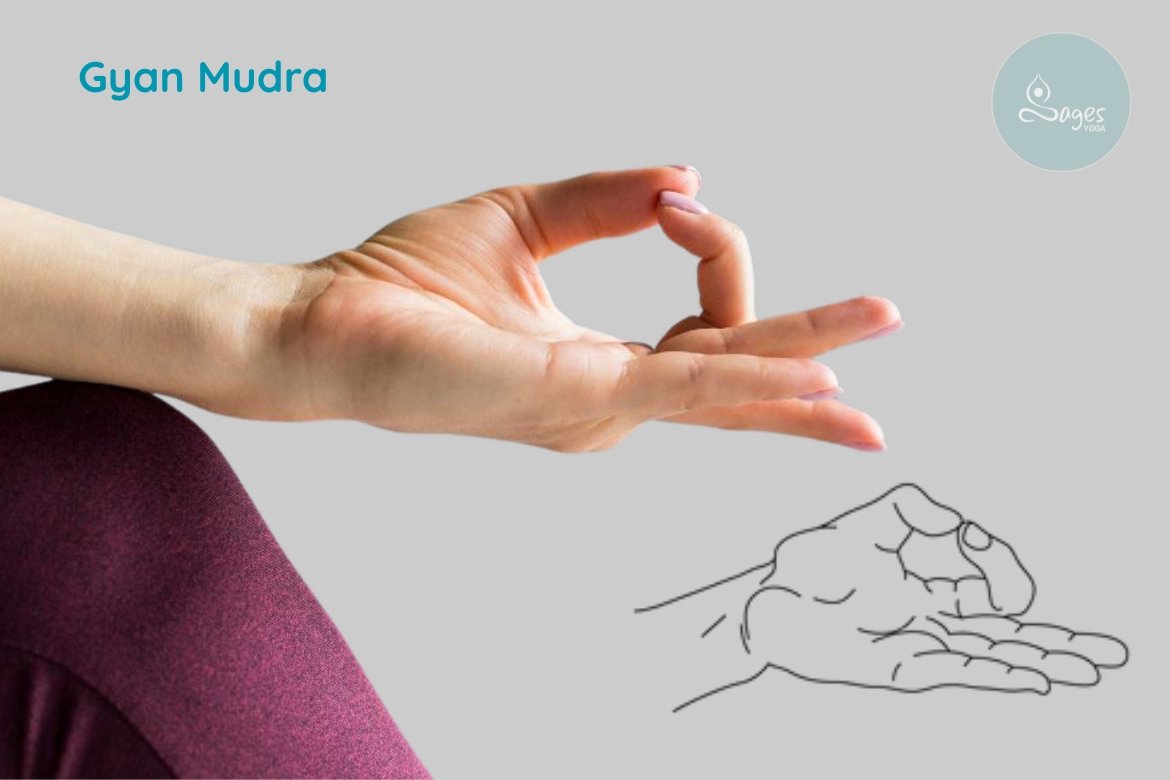
How to practice Gyan Mudra?
- Internally find a comfortable sitting position: You can opt to sit on the floor cross-legged or sit on a chair with a straight back and relaxed body.
- Place your hands together on your knees or thighs: With your palms facing upwards in an open posture, indicating that you are ready to accept knowledge and wisdom. Mudras for peace promote emotional harmony and help quiet the restless mind.
- Bring thumb and index finger together: Keeping fingers very light, touch the end of your thumb with the end of your index finger and form a small circle or loop.
- Stretch the other three fingers: Be sure that your middle, ring and little fingers are resting and not straining.
- Breath deeply and naturally: Breath in and out slowly and deeply with the pace of your breath leading you into a state of calm and focus.
- Keep the gesture for a few minutes: There is no hurry; you need to take time and feel the fine energy running through your fingertips.
Benefits
Usually billed as the chin mudra, it is the most popular hatha yoga in meditation, pranayama or asana that assists in enhancing the concentration, knowledge and memory of an individual. It not only assists in raising negative energy but also puts a person in a more receptive state, relaxes the mind and relates a person with his or her higher self. Mudras for focus enhance concentration and support mental clarity during work or study.
2. Agni Shakti Mudra
Fist in front and face down. And now simply remove the thumbs and fold the tips and the rest of the fingers are folded. Keep this gesture as long as you are able.
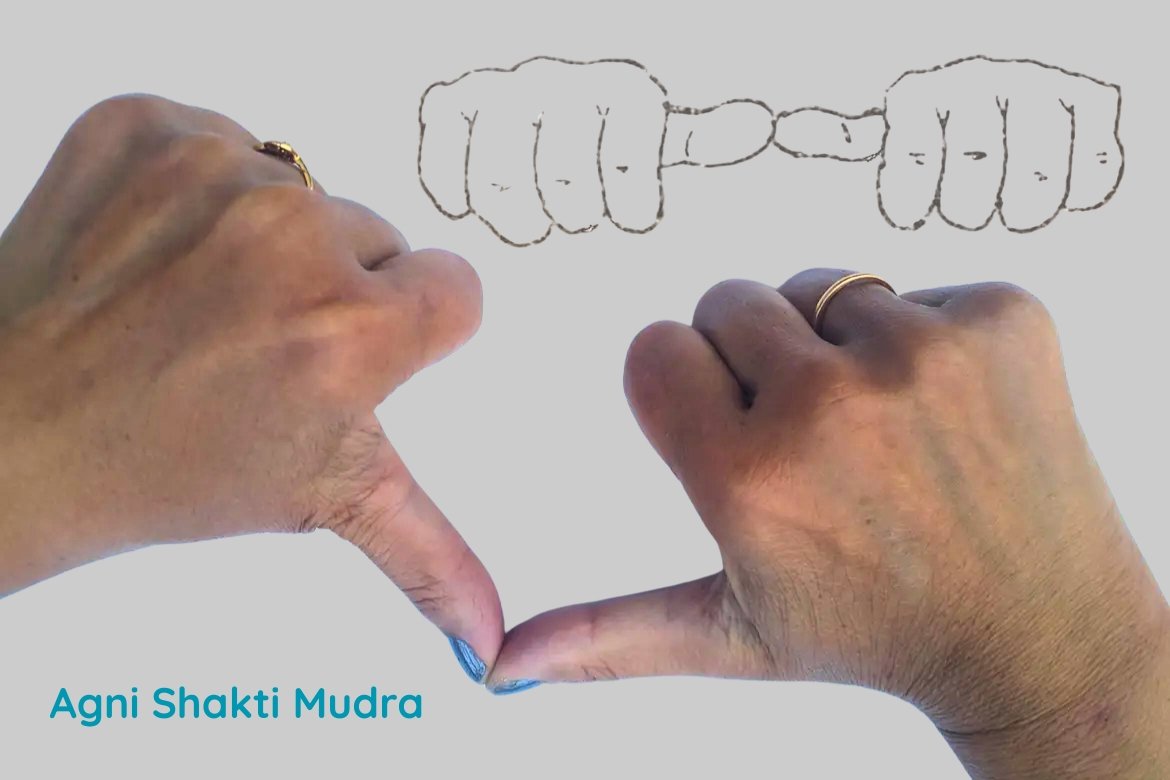
How to Practice Agni Shakti Mudra?
- Sit comfortably: Select a sitting posture such as cross-legged sitting or lotus sitting.
- Align your body: Keep the spine erect and the neck relaxed.
- Lay your hands: Keep your palms on your knees, upwards.
- Bend the ring finger and touch the base of this finger with your thumb.
- Thumb on the center of the ring finger.
- Keep the rest of your fingers straight.
- Do the same with both hands.
- Close your eyes softly with a focus on your breath.
- Breathe deeply: Practice deep, slow breaths. There are breathing exercises you can practice to warm up the body.
Benefits
Despite the fact that it is very simple to form this gesture, Agni Shakti Mudra is of great importance in assisting to wrestle oneself at times of abrupt temper aggravation, fear or anxious moments. Mudra for stress and anxiety helps relax the body and release mental tension. Not only does it relax the mind, but it also enables one to relax and find peace. Therefore, the next time you feel tense or anxious, instead of biting your nails, you may relax by doing the Agni shakti mudra.
3. Uttarabodhi Mudra
Bring the tips of the index fingers and the thumbs of the two hands into contact with each other. The remaining three fingers are then interlocked in a certain way, and the gesture is held in front of the solar plexus or the pit of the stomach so that the index fingers face the ceiling and the thumbs face the floor. Sit and maintain this position between 5 and 10 minutes.
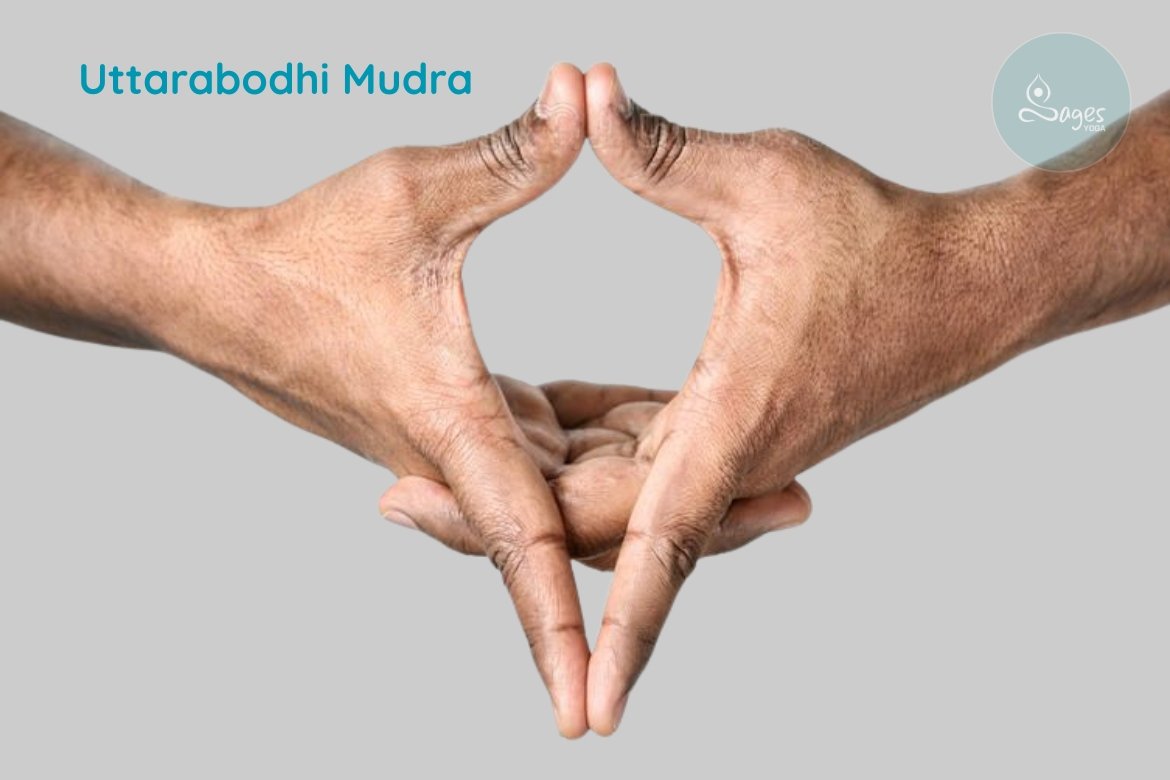
How to Practice Uttarabodhi Mudra?
- Sit Comfortably: Sit in a comfortable posture, be it cross-legged or on a chair with your spine straight.
- Positioning of hands: Both hands, placed in front of your chest. Cross fingers, except index fingers and thumbs.
- Extend the Index Fingers: Straighten your index fingers, point directly in the air, push them together.
- Thumb Position: Place the ends of the thumbs at the tips and point them downwards.
- Focus: Place the mudra on your heart and concentrate on your breathing and meditation.
Benefits
Uttarabodhi mudra, also called the hand gesture of enlightenment, is a very useful way of calming a troubled mind and calming the nerves. It is very important in eliminating fear, enhancing self-confidence, focus, concentration, problem-solving and decision-making capabilities. Mudra for anxiety and depression supports emotional balance and encourages a positive mindset.
4. Apan Vayu Mudra for Anxiety
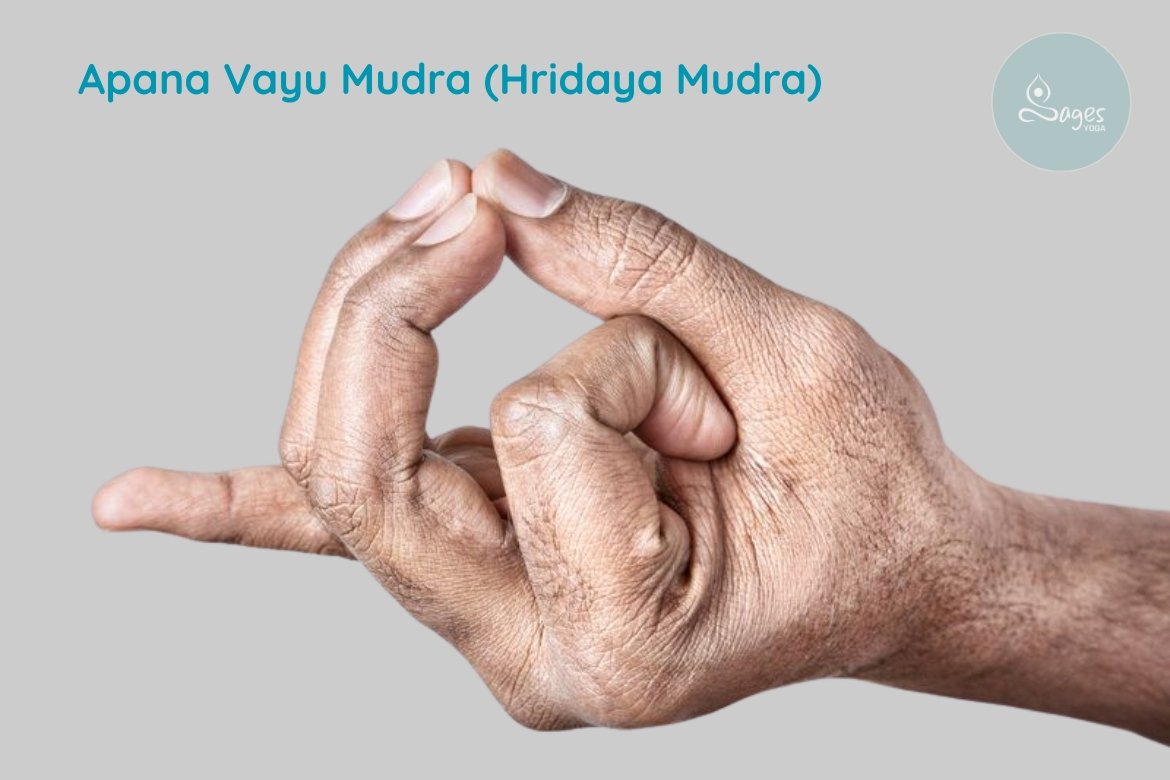
Another mudra that deals with the Earth element is Apan Vayu Mudra. It is believed to augment the earth element (thinking grounded, steady, supported, safe), the fire element (action, heat), and the element of space/ether (akasha/ether), and it under-regulates the air element. Ayurveda states that when there is an excess of air element in the body, it may cause the person to be nervous, flighty, erratic and even panic attacks.
The ancient rishis (seers in India) state that Apan Vayu Mudra can be applied to maintain the health of the heart, and should be applied during a heart attack whilst travelling to the hospital. This gesture is also known as the Lifesaving Gesture of the Heart.
How to practice Apan Vayu Mudra?
- Take your index finger to the bottom of your thumb.
- Then hold the tips of the middle finger and the ring finger to the end of the thumb.
- You should hold your pinky up long.
- Bend your hands on your thighs or knees.
- Practice for up to 30 minutes.
Benefits of Apan Vayu Mudra
- Relaxes the nervous system and the brain.
- Lessens panic attacks.
- Heart health.
Read Also:- 10 Effective Hip Opening Yoga Poses for Better Mobility
Final Thoughts
These four yoga mudras for anxiety can be added to your routine and provide immediate relief against anxiety and stability of emotions. For aspiring teachers or those looking to implement these methods in a career in wellness, Swasti Yoga Centre can be considered a reliable institute in India for Yoga Instructor certification. Having the programs oriented to the standards of the Ministry of AYUSH and focusing on the authenticity of yoga education, it is the right place to develop personally and professionally.
Frequently Asked Questions
What is the duration of practice of a mudra to use in anxiety?
Exercise for 10-20 minutes per day to see results. They also come in handy during stressful times to offer you instant calming.
Is it possible to combine mudras and breathing exercises?
Yes. Mudras work best in combination with: 1. Slow, deep belly breathing 2. Alternate nostril breathing (Nadi Shodhana) 3. Guided meditation
What is the rate of mudras with anxiety?
Other individuals feel relaxed in a few minutes. To ensure the long-term benefits, it is suggested that one practice it daily for a few weeks.
Are there any side effects?
Mudras are usually non-vigorous and non-invasive. They are, however, complementary practices and not a replacement for medical or psychological treatment. In case of severe or chronic anxiety, seek the advice of a trained medical practitioner.
Categories
Our Popular Yoga Courses
Yoga Teacher Training Courses in Rishikesh, India
Join our Yoga Alliance certified 100 to 500 Hour Yoga Teacher Training in Rishikesh — the Yoga Capital of the World. Learn from expert Indian gurus.
200 Hour Yoga Teacher Training in Rishikesh
Yoga Alliance certified TTC for students who want to become professional yoga teachers.