Kemetic Yoga Poses: Ancient Egyptian Wisdom
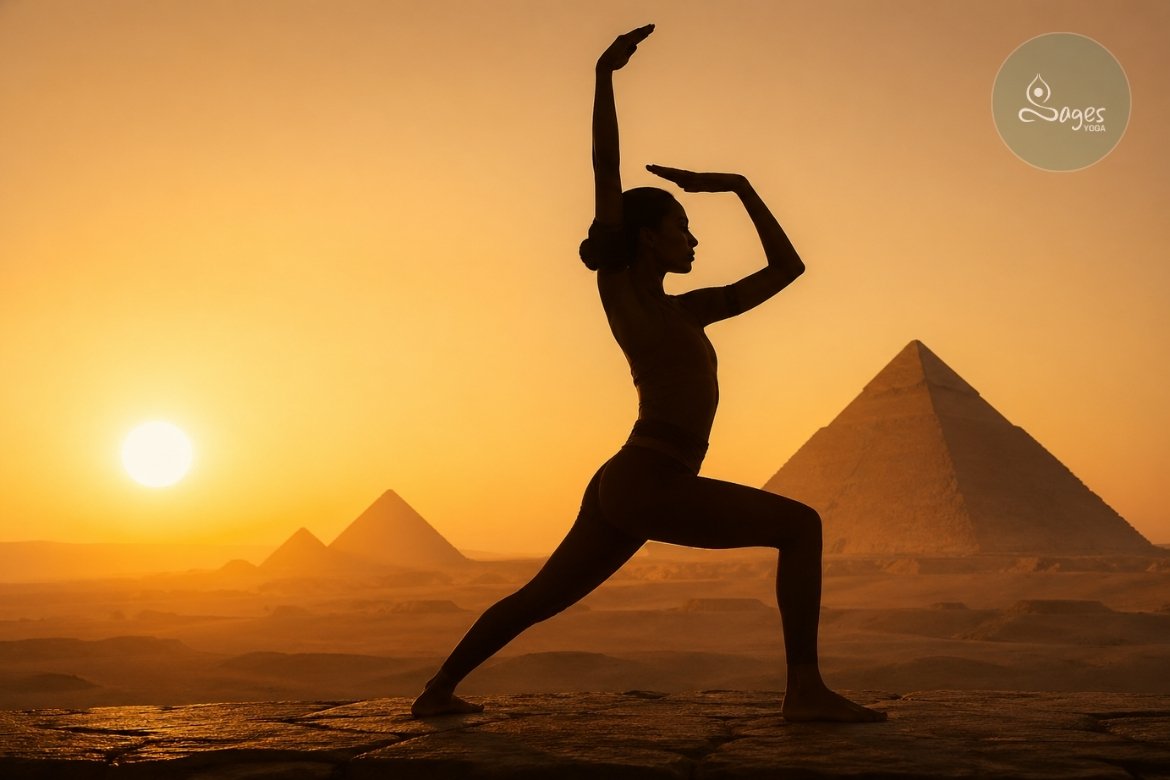
Kemetic yoga poses are slow, calming, and sustainable to build your body-mind connection. Your current practice might feel too fast, too focused on performance, or not connected to anything deeper than a good stretch. Yoga focuses on harmony rather than building strength. You must follow these poses to feel fresh energy in your body. Figures on the walls of the temples at Karnak and Luxor hold their bodies in exact geometric shapes, with their arms at precise angles and their spines aligned.
Kemetic Yoga is oriented toward alignment, breath control, and movement sequences that support the nervous system and promote mental awareness. The motions are slow, and most are conscious, building a connection between body and mind. Let's unfold the best five Kemetic yoga poses for beginners to get ancient Egyptian wisdom in your daily life.
What is Kemetic Yoga?
Kemetic yoga is a movement, breathing and meditation yoga based on the spiritual science of ancient Kemet. "Kemetic" is a term that is associated with the land that was known as Kemet, or the black land, the fertile land around the Nile River.
Kemetic Yoga is an African-based healing art and spiritual system that developed out of hieroglyphic poses and temple carvings of ancient Kemet. The yoga poses balance Ka (spirit), Ba (soul), and Ankh (life force).
The yoga poses are based on three pillars: controlled breathing (known as Smai Tawi), the accuracy of the body's geometric positions, and the body movements associated with Egyptian deities and cosmic forces.
Egyptian yoga is not stretching yoga poses. It is a philosophy of self-transformation that takes the human body as aligned with the cosmos. The yoga poses are associated with particular energies or divine principles, such as connections to the elements of nature. The physical exercise is specifically designed to awaken that energy within you.
Best 5 Kemetic Yoga Poses for Beginners
Several Kemetic yoga poses that beginners and intermediates can perform. The first step is to wait, align with the breath, and practice patience. Then you can start your yoga poses, performing with a calm mind, focusing on your body posture and feeling the energy. Now, here are the best five yoga poses that beginners can perform:-
1. The Mummy Pose (Ausar)
The pose is after the name Ausar (Osiris), the god of resurrection and eternal life, which is simply a standing figure with his arms crossed over his chest, hands on his opposite shoulders. Feet are together. It has a long, vertical spine. Wait 60 seconds, performing the breath using the Smai Tawi rhythm.
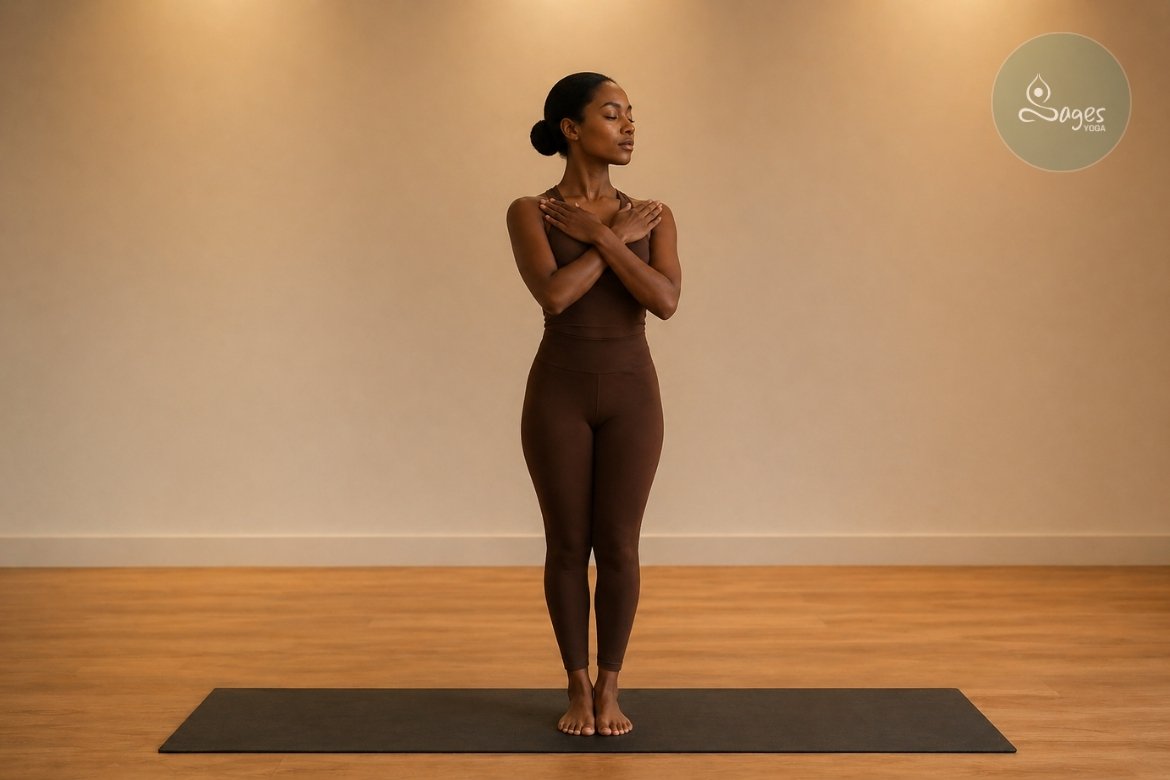
It looks simple. The ability to maintain a very straight spine, soften the breath, and keep the arms straight is a form of deep body consciousness.
2. The Goddess of the Sky (Nut)
Nut is the goddess, and her arch is the vault of the sky, with the earth beneath her. Practically lie on your back. Lift your body with it, pressing your palms flat against your hips, keeping your arms straight and your elbows tucked in. There is a lifting of the chest, a lifting of the gaze, and a bending of the spine backwards.
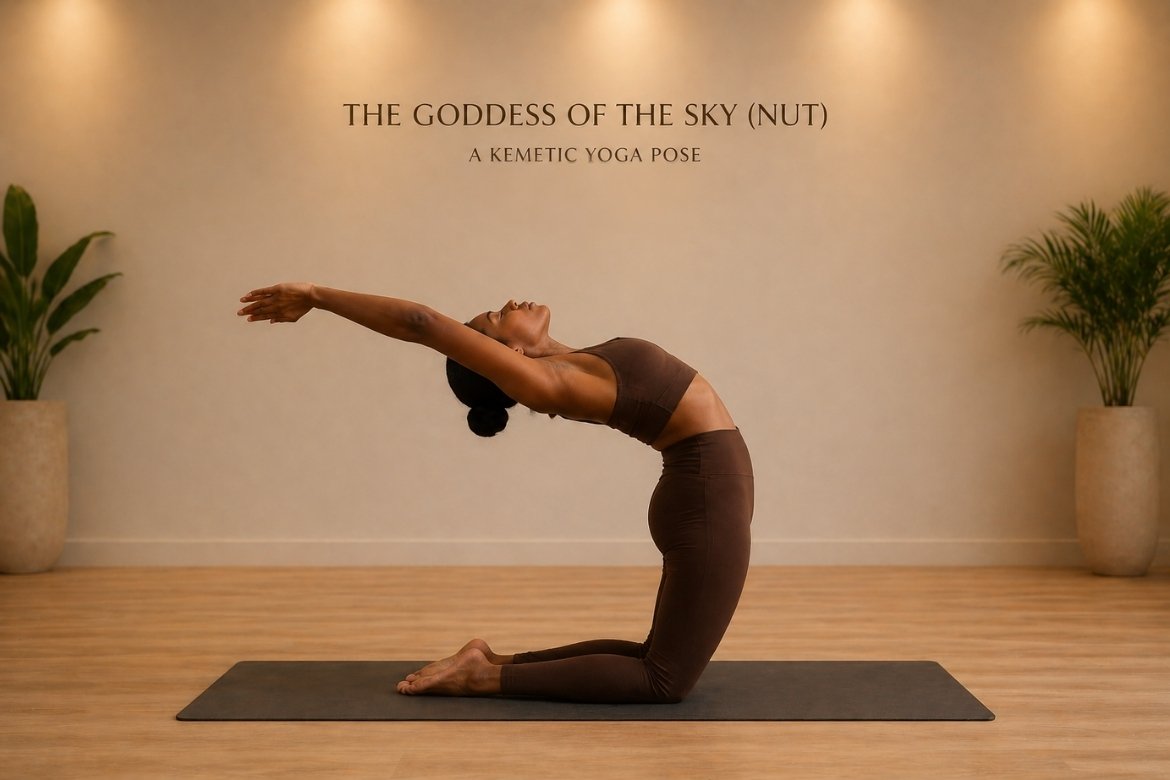
This pose, you will know, is the nearest in Indian yoga. The difference is in their arm position. Your arms are at a right angle to the floor. Breathe 4 complete cycles. The pose extends the chest and activates the heart's center.
3. The Earth God Pose (Geb)
Nut has an earth partner, Geb. Place both legs straight, and bend one knee towards your chest while keeping the other straight. These are both arms that are extended at right angles to the body. The frontal knee is bent, leaning forward to one side, with the gaze moving in the opposite direction. Spine rotation decompresses the spine and relieves tension on the sacrum.
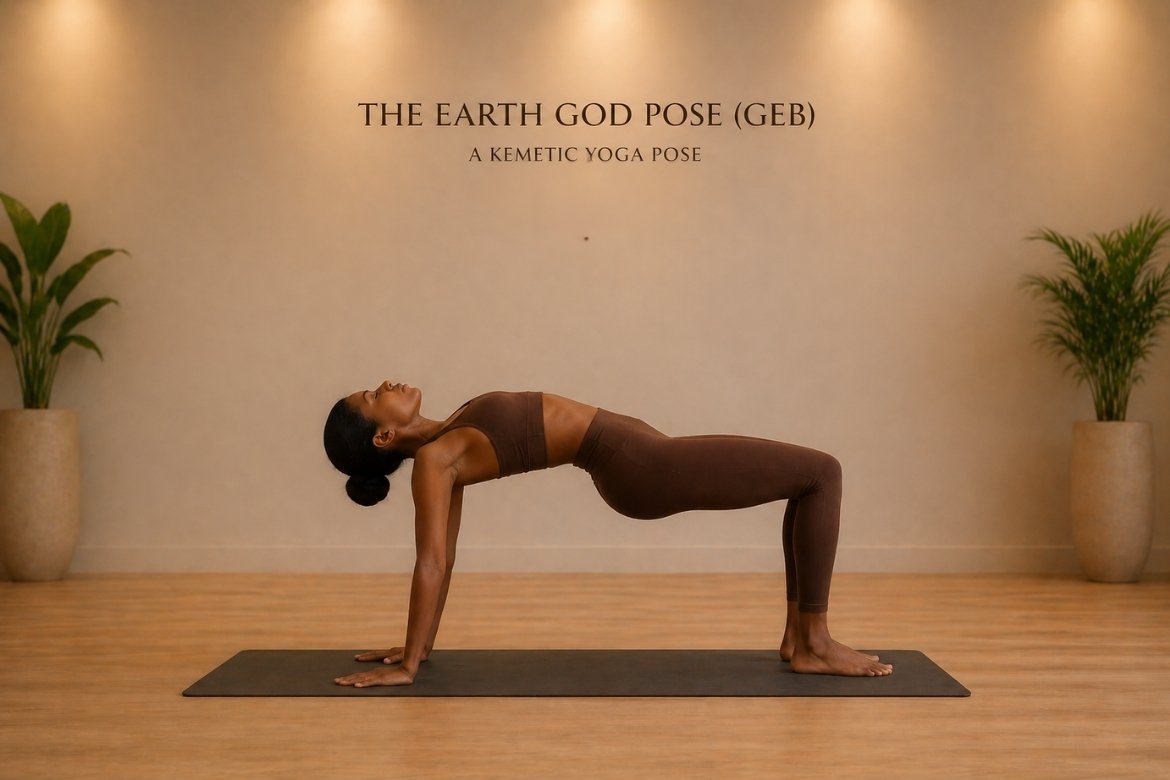
Support 30-60 seconds per side. It is one of the more restorative Kemetic poses for those with tight lower backs.
4. The Falcon Warrior Pose (Heru)
In Greek culture, Heru, or Horus, is either depicted as a standing falcon or a fully armed warrior in temple art. Practically, spread your feet nearly apart. Bend the knee to 90 degrees in one direction and extend both arms to shoulder height at right angles to the floor. Keep your eyes focused on your forearm.
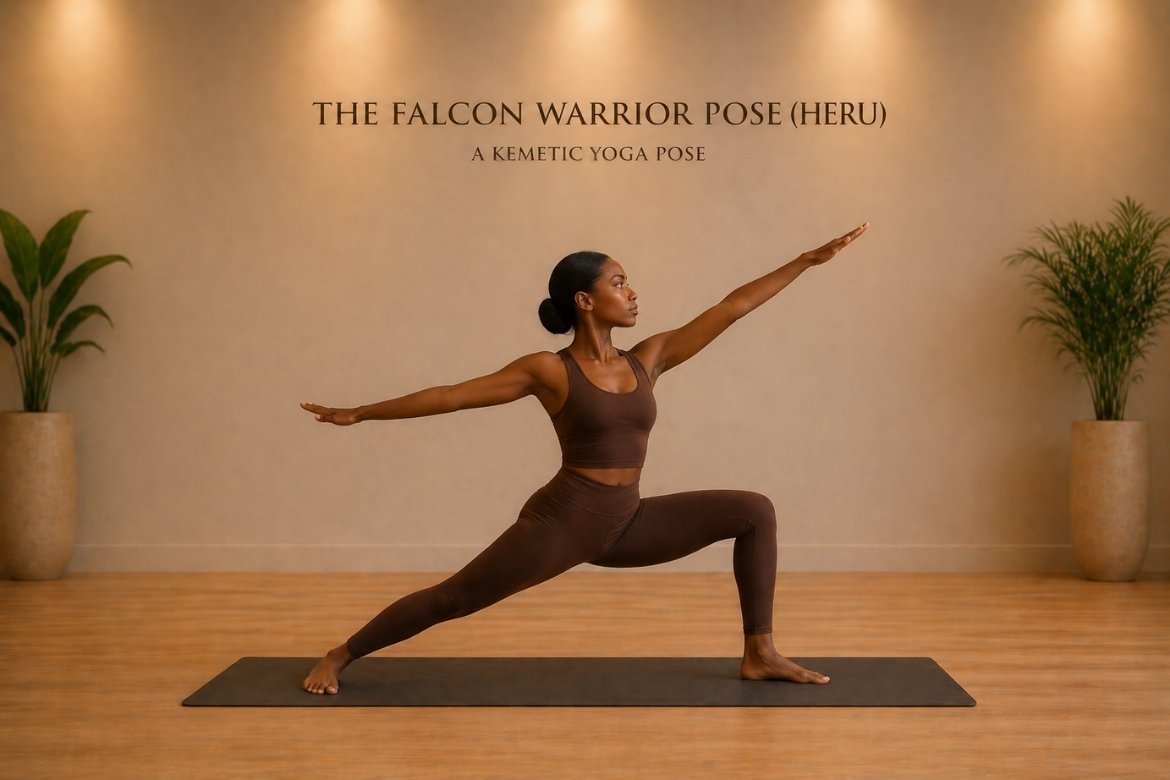
Here is the Kemetic warrior. It strengthens the hips, thighs, and shoulders together. In less than 45 seconds, you will have Heru on your front thigh.
5. The Throne Pose (Auset)
Auset (Isis), the goddess of protection and magic, is often painted in the pose with one knee raised and the arms outstretched. Sit cross-legged or on your heels. Reach one arm over your head, bending your elbow so that your palm faces down behind your head. The other arm stretches in front at shoulder level. Hold the position and breathe.
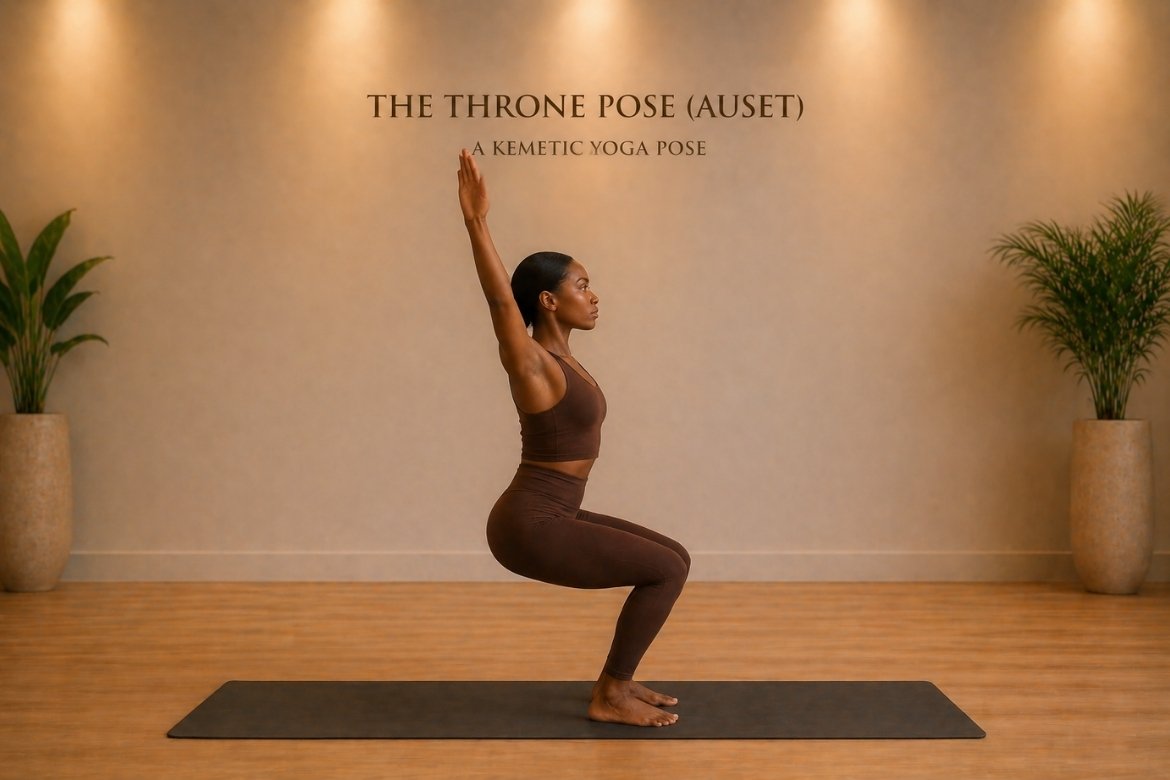
It is an opening pose that extends the shoulders and sides of the body but requires a sense of balance while sitting. It provides one of the few Kemetic yoga poses that offer a significant side-body stretch on a fully grounded base.
A simple Kemetic yoga sequence to begin your practice
As a beginner, Kemetic yoga practice does not necessarily have to be lengthy. Twenty minutes in a morning practice is enough for a day. Here is a sampler sequence made up of the five poses above:-
- Begin in a sitting-up or lying-down position. Repeat Smai Tawi 10 times with a 4-count inhalation, 2-count hold, and 4-count exhalation. Allow your nervous system to slow down before you start.
- Take the Geb pose on each side and hold for 60 seconds. The Geb pose lengthens the spine upward, starting from the base, without requiring standing balance.
- Then focus on Nut Pose. Four complete breathing repetitions. Slowly bring it down to the lower back.
- Come to a standing position. Hold the mummy pose for 60 seconds without thinking of anything, concentrating on your breath and the sensation of your feet touching the ground. Then step your feet out very wide on both sides into the Heru pose,at about 45° each.
- Conclude the Kemetic yoga sequence with Auset Pose, and resume stillness on your back (three to five minutes). This last rest allows the practice's implications to sink in.
Benefits of Practicing Yoga daily in a Sequence
Changes commonly reported by practitioners who regularly practice Kemetic yoga for 8 weeks or more include better sleep, less tension in the lower back, and breathing during stress that has become much calmer. These are not mystics' assertions. They are the direct products of the mechanically followed practice.
The poses are slow and held, enhancing circulation in the deep muscles of the spine, largely disregarded by most forms of exercise. The focus on geometric alignment gradually addresses posture disorders that accumulate from desk work, telephone use, and chronic sitting.
Smai Tawi breathing does the same thing to the parasympathetic nervous system as other deep diaphragmatic breathing exercises, which studies at the Cleveland Clinic and other institutions have found to uniformly lower cortisol and improve cardiovascular performance. The poses in Egyptian yoga are static and most begin on the floor, making this practice suitable for everyone.
You May Also Like : Cross Legged Yoga Pose (Asanas): Benefits, Steps & Variation
Conclusion
Kemetic yoga poses aren't meant to help you get better at taking photos. They are meant to help you build a relationship among your breath, your body, and your awareness, which most modern movement practices don't focus on. You won't notice it after just one session. You'll notice it all the time after six weeks. This guide lists five beginner-friendly poses. Do these three times this week, for 20 minutes each, and make sure to keep the Smai Tawi breath steady throughout.
Frequently Asked Questions
What do we know about Kemetic yoga and its origins?
Kemetic yoga is a school of meditation and movement based on ancient Egyptian spiritual practices. It was codified by the modern audiences of Dr. Asar Hapi and Master Yirser Ra Hotep and was based on the body positions shown in temple carvings and hieroglyphs. It combines geometric positions, deep breathing, and meditation.
Is Kemetic yoga appropriate for the novice?
Yes. Kemetic Yoga beginner practices are simple, gradual, breath-guided, and critical for those seeking balance without a high level of flexibility.
What is the advantage of Egyptian yoga?
It enhances stance, decreases tension, maintains energy, and makes people more spiritual by uniting body and soul with mindful geometry.
What makes Kemetic Yoga unlike ordinary yoga?
Although both are concerned with unity and mindfulness, Kemetic Yoga focuses more on the symbolism of ancient Egypt, poses, and rhythmic breathing, all based on the wisdom of the ancestors.
Would it be possible to practice Kemetic Yoga Jeong Yi Gua?
Absolutely. You require space, breathing slowly, and devotion. Observe the pose of a deity such as Ausar, which is easy to follow for starting the healing process.
Categories
Our Popular Yoga Courses
Yoga Teacher Training Courses in Rishikesh, India
Join our Yoga Alliance certified 100 to 500 Hour Yoga Teacher Training in Rishikesh — the Yoga Capital of the World. Learn from expert Indian gurus.
200 Hour Yoga Teacher Training in Rishikesh
Yoga Alliance certified TTC for students who want to become professional yoga teachers.