Matsyasana (Fish Pose): Steps, Benefits & Beginner Guide
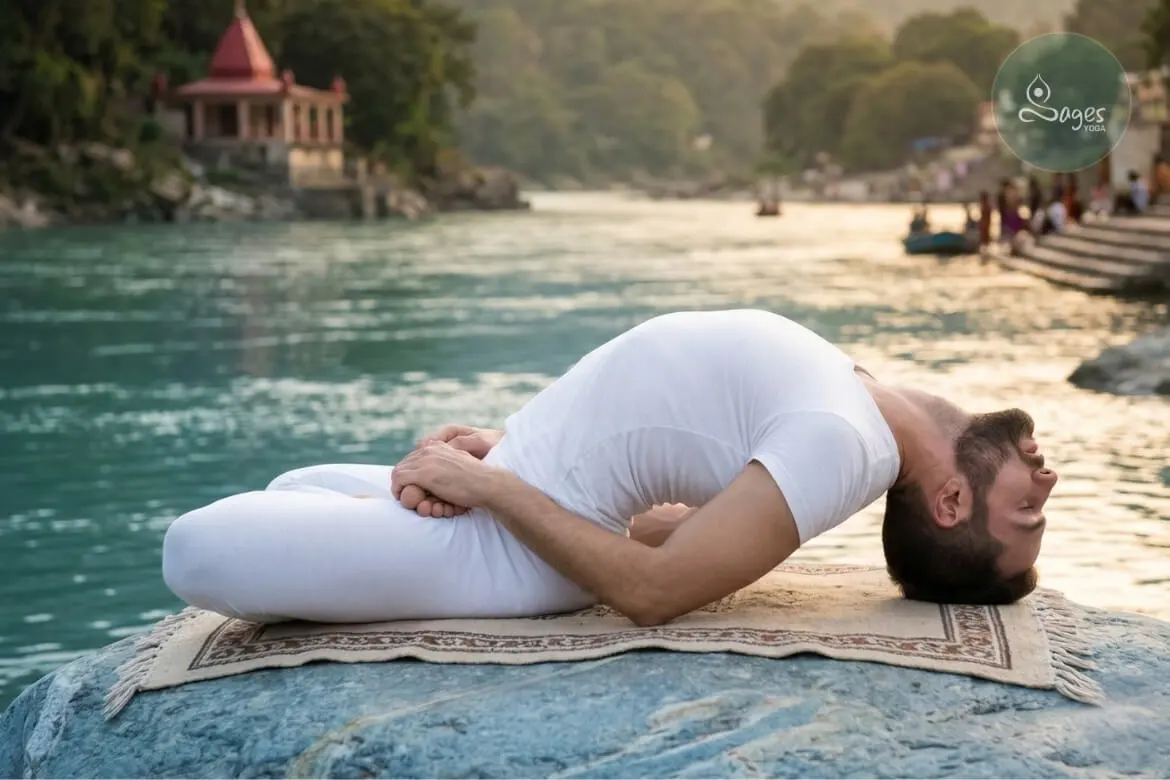
Fish Pose, or Matsyasana, is a chest-opening recline backbend. It is normally practised as a counterpose to a shoulder stand or a headstand to relieve the tension in the shoulders, neck, and spine. Matsyasana (Fish Pose) is a yoga posture that opens the chest and improves breathing. Matsyasana has your pelvis on the floor to allow your arms to be placed under. Your legs may be straight or bent, your head on the mat, and your bent elbows may support your core. In this pose, you will have to lift your chest and curve your back. This is a posture that stimulates your crown, throat and eye chakras, fostering wisdom, emotional healing and increased hormonal balance. Practising the fish pose benefits the lungs, thyroid gland, and posture.
Matsyasana Poses Preparatory
It is very important to warm the shoulders, spine, neck and lower back in order to achieve the perfect fish posture. The yoga fish posture helps stretch the chest, neck, and abdominal muscles. Some of the warm-up yoga poses to energize your muscles and kick-start your blood are as follows:-
1. Ustrasana (Camel Pose)
The pose is also referred to as the kneeling back-bend. Begin by standing on your knees with your core muscles and spine straightened. Draw a breath and swell your chest, and start to bend your neck. Breathe in slowly with the chest, arch your lower back, and grip the ankles with your fingers. Now make a long inhalation, and sustain the pose by exhaling. All the muscles needed in Fish pose are opened in this asana. Regular practice of Matsyasana benefits the spine by increasing flexibility.
2. Salabhasana (Locust Pose)
It is a relatively easy pose of back bending and a great method to train lower back and core muscles. Begin by lying on your stomach and using all of your muscles and back. Then, breathe in, and lift your legs out of the mat and bring your arms to hover by the sides. Keep your eyes straight up. Stay in this position between 10 and 60 seconds. Many beginners ask what is Matsyasana, and it is a back-bending yoga pose known as the Fish Pose.
Matsyasana Step-by-Step Guide
The steps involved in the practice of Matsyasana or Fish pose, are the following:-
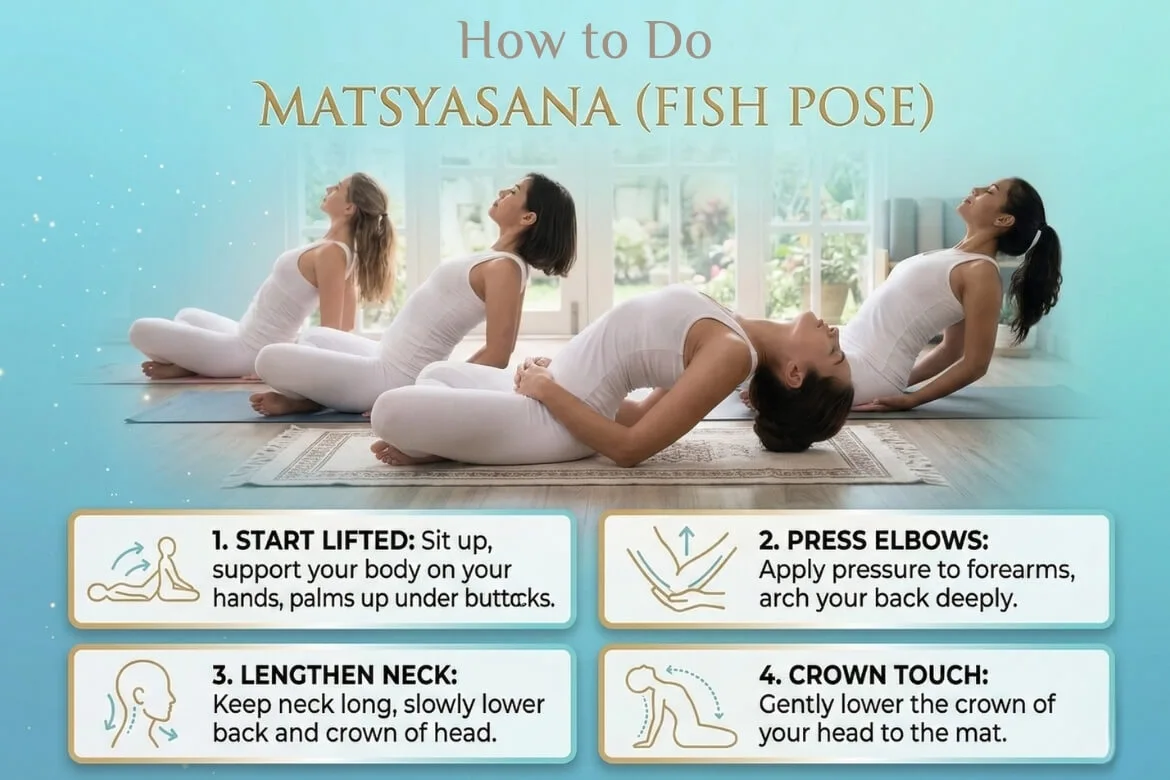
Step 1:- Begin sitting in Lotus or Staff pose by breathing in. Take a few deep breaths.
Step 2:- Start by sitting down to the fullest on the yoga mat.
Step 3:- Take your hands under your lower back with your palms touching the mat just below your tailbone.
Step 4:- Breathe another deep breath, and maintain the crown of your head to the ground.
Step 5:- At this point, again contract your chest muscles with your next breath and start lifting your neck, spine and chest off the mat as though a piece of string is pulling them all together towards the ceiling.
Step 6:- Make sure your back is in a curve, and the elbows and palms are against the yoga mat to hold your back.
Step 7:- Let your body relax with deep breathing in and out with the Matsyasana (Fish pose).
Step 8:- Work on this position for a few seconds and then carefully release your chest, neck and spine in that order.
Read Also:- Mayurasana (Peacock Pose)
Things to Keep in Mind
When you are doing the Fish pose, it is a precarious position for the neck and spine.
1. Do not strain your head or neck
Sustaining Matsyasana (Fish pose) with your head, neck, and spine over an extended period of time without any previous strength training may cause muscle cramps or severe spinal damage. To initially develop the sufficient strength to hold on longer, attempt to have several short breaks after every few seconds.
2. Get your head straight
Do not pull the top of your head off the ground. Attempt to maintain the head straight with your neck, spine, core and tailbone.
3. Never over-arch your back
Over-arching the lower back and under-arching the upper back is the most common error that most practitioners commit when performing Matsyasana. This is, however, the opposite. To correct this issue, it is necessary to use your core muscles and bend your tailbone flat to the mat. Attempting to flex your upper spine through the pressure of your palms into the mat will now be attempted. The procedure of Matsyasana involves lying on the back, lifting the chest, and placing the crown of the head on the floor.
Matsyasana (Fish Pose) Benefits for Body and Mind
Matsyasana (Fish Pose) is a good pose with a number of physical and mental advantages, and it should be included in your yoga practice. The key benefits are the following:
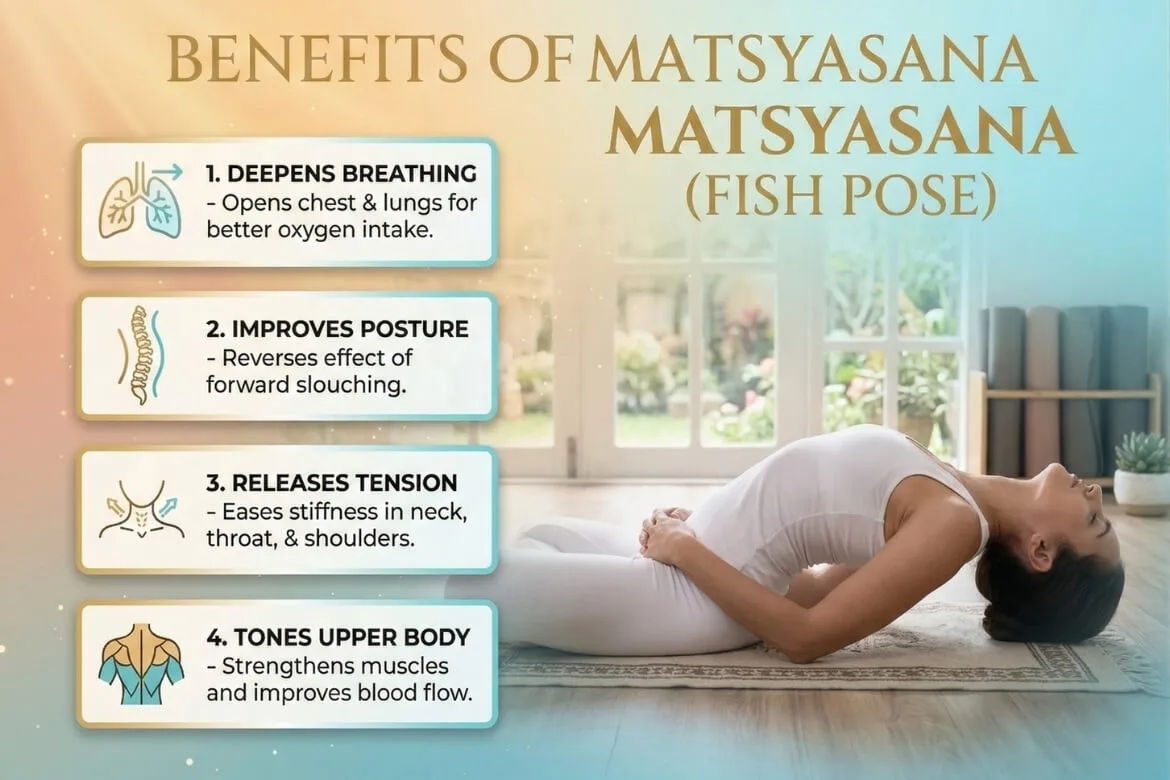
- Enhances Flexibility of the Spinal Area:- The natural backbend helps in tightening muscles that accumulate as a result of bad sitting poses particularly when in desks or computers.
- Activates Core Muscles:- When lifting the chest and maintaining the arched position, your abdominal muscles will be engaged, which will make the core stronger and contribute to the overall stability.
- Improves the Digestive System:- Matsyasana squeezes the digestive organs, thereby improving the digestive system, relieving bloating, and boosting metabolism. This position also enhances frequent bowel movements and constipation.
- Activates the Thyroid:- This minor pressure in the throat in the pose activates the thyroid gland, which controls metabolism and energy levels, and Matsyasana is excellent to increase energy and general vitality.
- Improves Respiratory Performance:- The chest enlargement of the pose enhances deeper breathing capacity to increase the capacity of the lungs and the efficiency of oxygen uptake which is especially useful in individuals with respiratory issues, such as asthma or bronchitis.
- Reduces stress and tension:- The stretch combined with deep breathing relaxes the nervous system, getting rid of stress. It is also capable of improving the quality of sleep by relaxing the mind and the body.
- Enhances Posture:- Matsyasana enables the muscles along the spine to be strong and thus resists the impact of bad posture that results from sitting or working at a desk.
- Brings Clearness of Mind:- Matsyasana is the perfect pose to practice mindfulness since it enhances clarity and concentration of the mind by opening up the chest and concentrating on the breath.
You May Also Like:- How to Practice Ksepana Mudra for Deep Release
Conclusion
Matsyasana, or Fish Pose, is a yoga pose that helps to increase flexibility, build up the muscles, activate the vital organs, and relax the mind. With the help of this position, you may experience the physical and psychological positive effects, such as improved posture, less stress, and enhanced digestion. To the people who would like to develop their yoga practice, a Yoga Teacher Training in Rishikesh is a great place to consider to experience such asanas like Matsyasana Fish Pose, its advantages, and how to teach yoga to other people. Always keep in mind that you should listen to your body, be patient, and adjust the position when it is necessary to gain the deepest advantages of Matsyasana.
Frequently Asked Questions
Are beginners capable of doing Matsyasana?
Yes, it is possible to teach beginners Matsyasana (Fish Pose) correctly. Simple forms such as Saral Matsyasana are suggested to begin with and apply some support, such as a cushion under the back. Amateurs are advised not to overstrain the neck and back and take it slowly in order to become more flexible and safer with their posture.
What are the advantages of Matsyasana?
Matsyasana enhances good posture, strengthens the back muscles and stretches the chest, neck and abdomen. It assists in enlarging of the lungs, which enhances breathing capacity. This position also activates the thyroid and parathyroid glands, supports digestion, and calms down stress and fatigue and helps to achieve general spinal elasticity and relaxation.
What is Ardha Matsyasana?
Ardha Matsyasana is a variation of Fish Pose, which is less complex. The body is arched only halfway in this posture as opposed to the entire Matsyasana. It opens the chest softly and extends the neck and back, and exerts less pressure on the spine. It is commonly done by novices or less flexible.
What is Saral Matsyasana?
Saral Matsyasana refers to easy or simple Fish Pose. It is done with the back position and the chest raised softly, and the head held on the ground. This position eliminates the stress on the neck and spine, which is why it is the best position for novices, older practitioners, or less flexible.
What are the various stretches in Matsyasana?
Matsyasana gives the body several stretches. It increases the expansion of the chest and rib cage, enhancing lung expansion. There is an extension of the neck and throat region and stimulation of glands. It also pulls the abdominal muscles and hip flexors and makes the upper back and shoulders stronger, which can improve the posture and movement of the spine.
In whom should Matsyasana not be practised?
Matsyasana should not be practised by persons with severe injuries to the neck, cervical difficulties or who have severe back pain. Only professional guidance is advised to those with high or low blood pressure, migraine, or recent spinal surgery. A yoga instructor or doctor should also advise pregnant women and those with vertigo before they attempt this pose.
Categories
Our Popular Yoga Courses
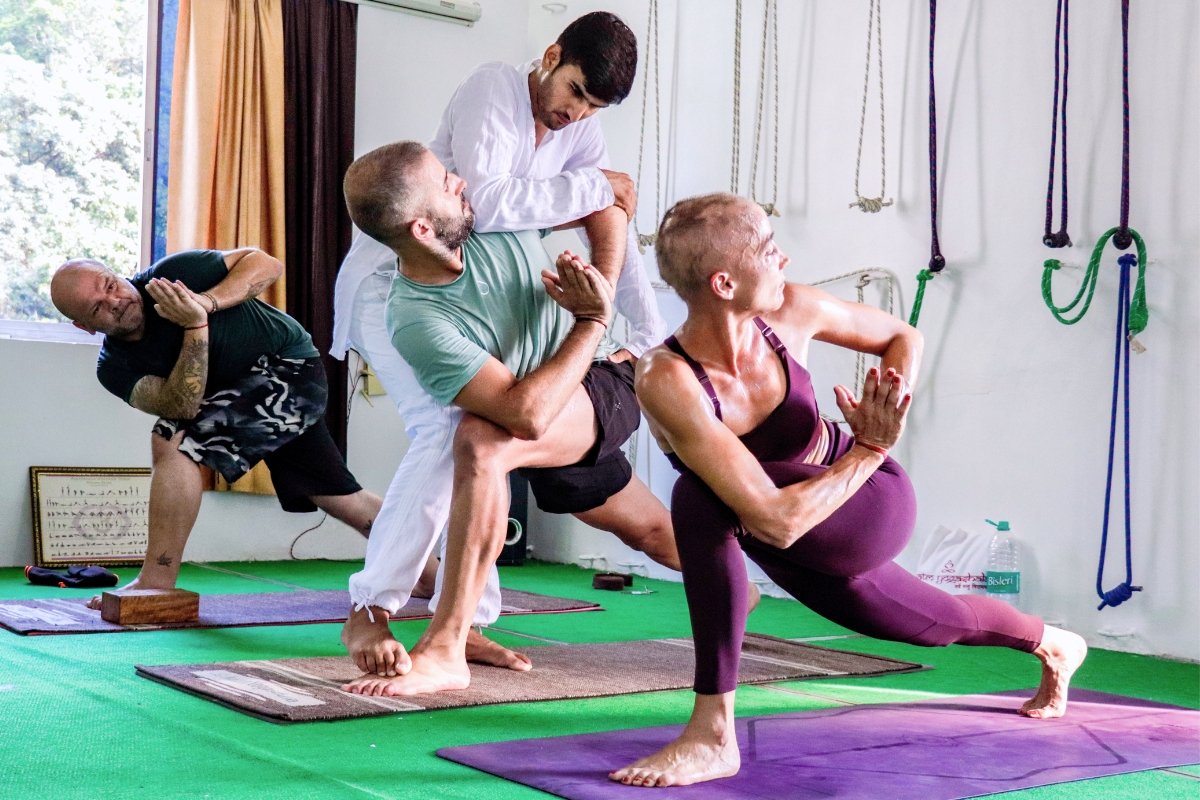
Yoga Teacher Training Courses in Rishikesh, India
Join our Yoga Alliance certified 100 to 500 Hour Yoga Teacher Training in Rishikesh — the Yoga Capital of the World. Learn from expert Indian gurus.
200 Hour Yoga Teacher Training in Rishikesh
Yoga Alliance certified TTC for students who want to become professional yoga teachers.