Mayurasana (Peacock Pose): Benefits, Steps & Yoga Guide
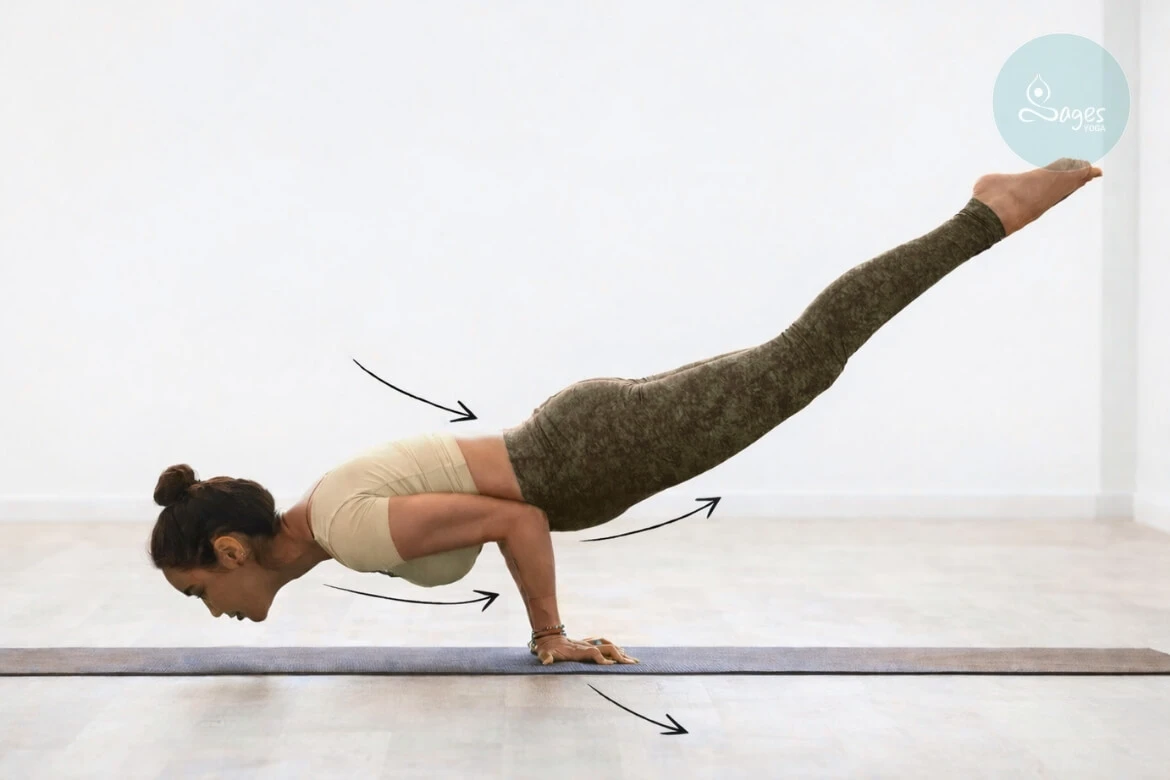
Yoga includes effective poses that enhance physical strength and balance and promote overall health. The advanced yoga posture, Mayurasana (peacock pose), is a traditional asana that provides remarkable benefits for digestion, strength development, and improved balance. The posture resembles a peacock, standing with elegant grace, which is why it is called peacock yoga.
The mayurasana peacock pose requires focus, arm strength, and proper technique. Yoga practitioners need to start learning the peacock asana because it helps them reach their advanced yoga skills. The guide will show how to perform mayurasana, explain its advantages and safety measures, and demonstrate the advanced Padma Mayurasana.
What is Mayurasana (Peacock Pose)?
The Mayurasana yoga pose requires advanced practitioners to perform an arm balance which starts from its Sanskrit base of Mayura and Asana. The peacock position yoga requires practitioners to balance their body weight horizontally through their elbows while keeping their hands in contact with the ground. The pose resembles a peacock, with its feathers displayed while remaining in a stable position. Hatha Yoga classifies mayurasana peacock pose as its second most effective posture because it strengthens the body and improves digestive health. A peacock yoga exercise helps in maintaining focus and achieving physical health.
How to Do Mayurasana? (Step-by-Step Guide)
People must learn how to do mayurasana correctly, as improper execution can lead to injuries that prevent them from reaching their full potential. Beginners should practice under guidance until they develop sufficient arm and core strength.
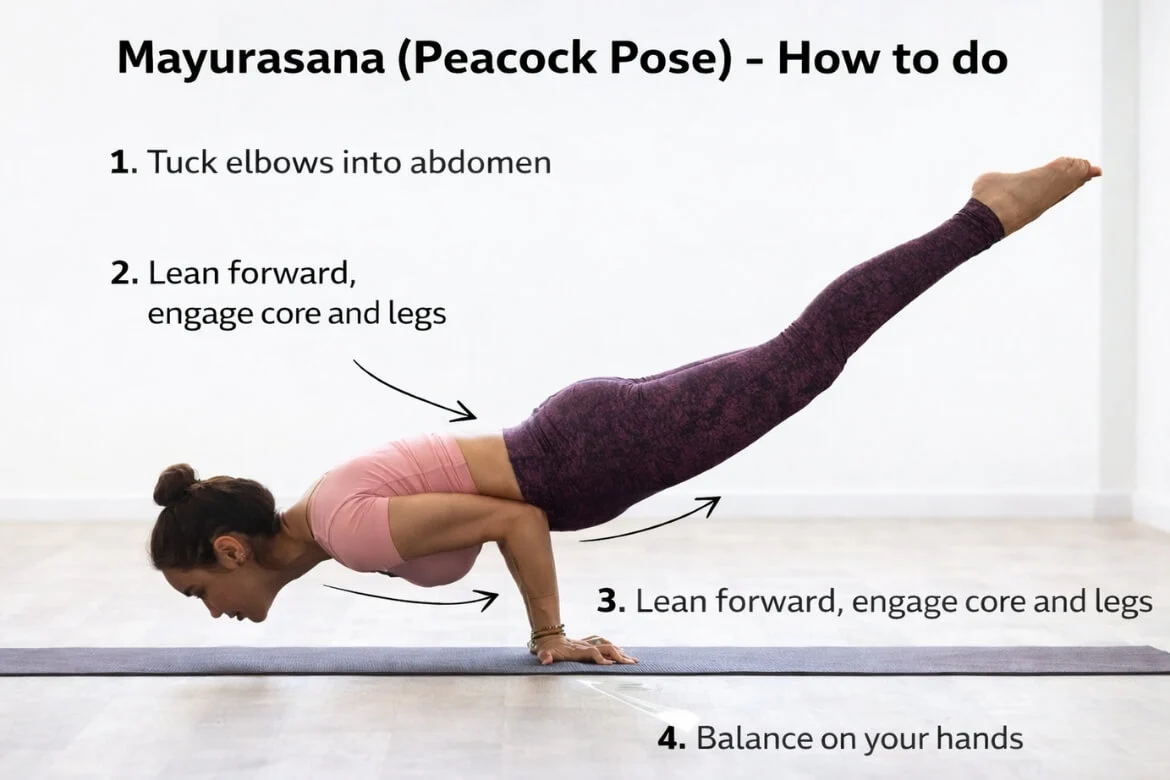
Step 1: Start with a Comfortable Position
Begin the yoga practice by kneeling on the mat in a comfortable position, using Vajrasana. The practitioner should start the pose by keeping their knees apart while maintaining a relaxed body.
Step 2: Place Your Hands on the Floor
The person should lean forward to place both hands on the space between their bent knees. Your fingers should point backward toward your feet. The person should maintain their palms in a stable position while their elbows remain partially bent.
Step 3: Position Your Elbows
You need to bring your elbows together at your center when you press them into your abdominal area between your navel and your stomach. This is the key position that supports the body in the mayurasana peacock pose.
Step 4: Lean Forward
You need to shift your body weight forward while you keep your elbows on your stomach. Your chest should move toward the floor as your legs extend backward.
Step 5: Lift Your Legs
You need to lift your legs off the ground while using your elbows and palms to keep your body stable. Your complete body should create a straight line that matches the level of the ground.
The final posture of peacock yoga requires the body to remain straight, like a plank, supported by the arms.
Step 6: Hold the Pose
You need to hold the posture for 10 to 20 seconds while you breathe normally. You need to control your body weight while you maintain your balance.
Step 7: Return to Starting Position
Lower your legs to the floor while resting in a comfortable position. Your ability to maintain the peacock posture yoga for extended periods will improve through regular practice.
Read Also:- 10 Effective Hip Opening Yoga Poses for Better Mobility
Benefits of Mayurasana (Peacock Pose)
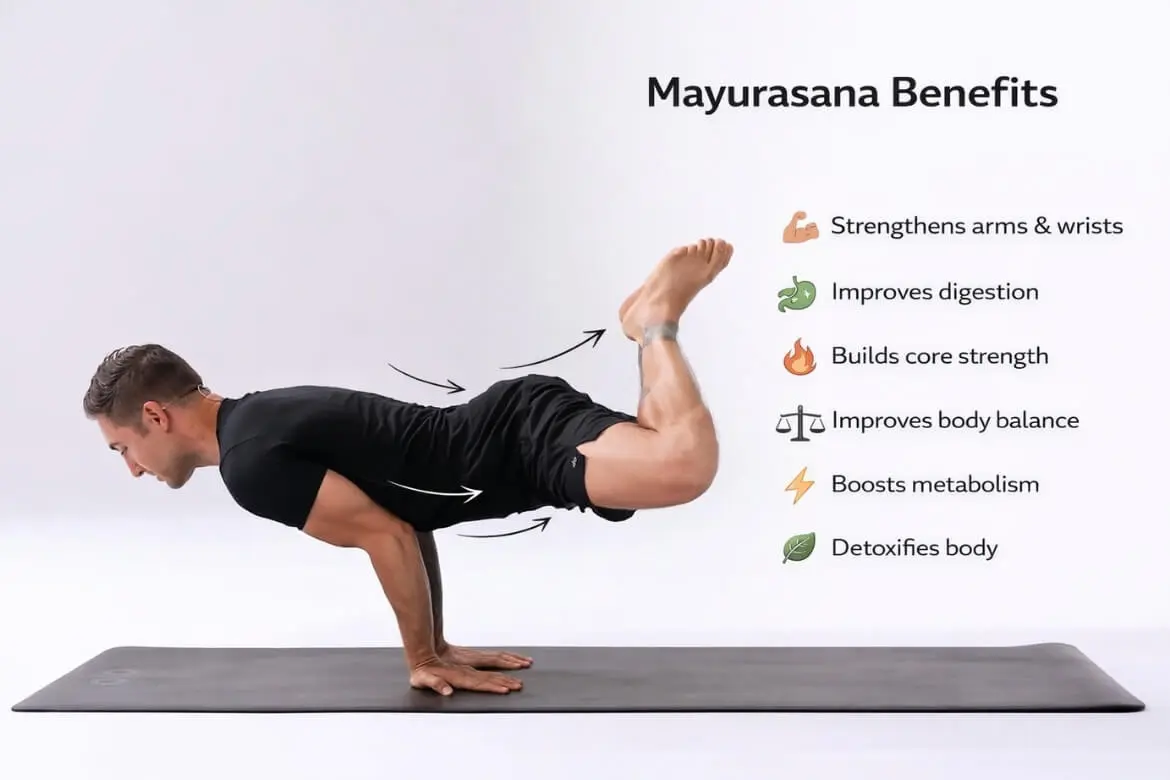
The Mayurasana peacock pose is of great importance in yoga practice because it offers practitioners multiple physical and mental benefits. Practicing peacock asana yoga provides the following four major benefits.
1. Improves Digestive Health
The practice of peacock yoga helps to improve digestive functions according to its main benefit. The abdominal area receives pressure from elbow movements which results in better digestive organ function and improved metabolic processes. The mayurasana peacock pose proves especially effective for individuals who experience digestive problems and slow digestion.
2. Strengthens Arms and Wrists
The practice of peacock yoga requires practitioners to distribute their complete body weight onto their arms. This exercise program leads to substantial increases in strength in the wrists, forearms, and shoulder muscles. The practice of peacock asana over time results in exceptional development of upper body strength.
3. Enhances Body Balance
The practice of mayurasana peacock pose improves human coordination and stability because its practitioners must maintain horizontal body balance. The practice of this exercise helps improve human neuromuscular control. The posture enables better body awareness development.
4. Detoxifies the Body
The traditional yoga texts state that peacock yoga helps people detoxify their bodies by affecting liver and kidney function. The body uses abdominal pressure to activate internal organ systems that help remove toxins.
5. Improves Concentration
The practice of peacock yoga requires practitioners to maintain their focus throughout the balancing poses. The pose should be practiced daily because it enhances mental clarity and concentration abilities. The practice is known to help people manage their stress levels.
6. Strengthens Core Muscles
The core muscles function as essential components that support body balance while practitioners perform the mayurasana peacock pose. The practice of this exercise leads to the development of abdominal muscles, resulting in better body alignment.
Common Mistakes While Practicing Peacock Asana Yoga
Beginners experience difficulties with mayurasana because they make small mistakes during their practice. The following errors should be avoided:
1. Incorrect Elbow Placement
The elbows need to make direct contact with the stomach area. A person will lose balance when their body parts are not properly positioned.
2. Lack of Core Engagement
The person needs core muscles to become active before they can maintain the peacock yoga position.
3. Lifting Legs Too Quickly
Beginners attempt to lift both legs at once. The correct method requires slowly moving the body weight from one side to the other.
4. Poor Wrist Support
Weak wrists can lead to pain. Implementing wrist-strengthening exercises will improve users' stability.
Precautions for Practicing Mayurasana
The practice of peacock yoga offers various advantages but requires practitioners to approach it with careful observation. People should not practice the mayurasana peacock pose because they have the following conditions:
- Wrist injuries.
- Hernia.
- High blood pressure.
- Pregnancy.
- Severe digestive disorders.
- Recent abdominal surgery.
Yoga beginners should start their practice slowly under the guidance of an experienced yoga teacher.
Padma Mayurasana (Lotus Peacock Pose)
Padma Mayurasana is an advanced form of the basic Mayurasana, or peacock pose. The practitioners of peacock balance must sustain their Padmasana (Lotus Pose) position through leg extension. The variation creates a more challenging situation that demands superior flexing ability and better balance maintenance.
How to Practice Padma Mayurasana?
The proper way to execute Padma Mayurasana begins with these instructional steps.
Step 1:- Sit in Padmasana
The sitting position begins with Padmasana which requires you to cross your legs and place your feet on your opposite thigh.
Step 2:- Place Hands on the Floor
Your body should move forward until you achieve the position where your hands touch the ground with your fingers pointing backward.
Step 3:- Position Elbows
Your elbows should be pressed into your stomach, as in the standard mayurasana peacock pose.
Step 4:- Lift the Body
The body needs to be lifted from the lotus position through forward leaning which enables body elevation.
Step 5:- Hold the Pose
The body needs to maintain its current position for 10 to 15 seconds while observing balance and stability requirements. The padma mayurasana exercise helps people build arm strength while improving balance and flexibility.
Tips for Beginners Practicing Peacock Position Yoga
The following tips will help beginners learn the peacock pose more effectively:-
1. Practice Strengthening Exercises
The peacock pose requires practitioners to develop wrist and shoulder strength, together with core muscle development.
2. Use Yoga Blocks
Yoga blocks enable beginners to perform the peacock pose safely by placing them under their chest.
3. Start with Half Pose
The starting point for beginners is one-legged lifts, which help them develop balance and self-confidence.
4. Focus on Breathing
For the peacock posture, it is necessary to maintain a slow breathing rate.
5. Practice Regularly
For the peacock posture to be mastered, it is necessary to practice regularly. This will help to develop balance gradually.
Also Go Through:- Lizard Pose (Utthan Pristhasana)
Who Should Practice Mayurasana Peacock Pose?
Mayurasana peacock pose is suitable for:-
- Yoga enthusiasts seeking to perfect the skills for advanced balancing postures.
- People who want to enhance their digestive system function.
- Athletes who need to develop their upper body strength.
- People who want to develop their ability to focus and maintain balance.
The level of practice for the beginners requires them to practice with the guidance of the instructor.
Final Words
Mayurasana peacock pose is one of the most powerful and impressive poses in the practice of yoga. Advanced peacock yoga helps practitioners build arm strength, improve digestive function, enhance balance, and increase overall body power. Patience and continuous practice are necessary to master the Mayurasana technique. The mayurasana pose is a complete system that helps the practitioners improve their physical health and concentration of the mind significantly. The practice of peacock yoga helps the practitioners develop the strength required for the practice of this unique pose.
Frequently Asked Questions
What is Mayurasana (Peacock Pose) in yoga?
Mayurasana is a yoga pose that requires balance on the elbows and palms while being parallel to the ground.
What are the benefits of Mayurasana?
The benefits include improved digestion, development of strength in the arms, improvement in balance, and increased focus.
Can a beginner practice Mayurasana?
Yes, a beginner can practice Mayurasana slowly with the guidance of a yoga instructor.
Categories
Our Popular Yoga Courses
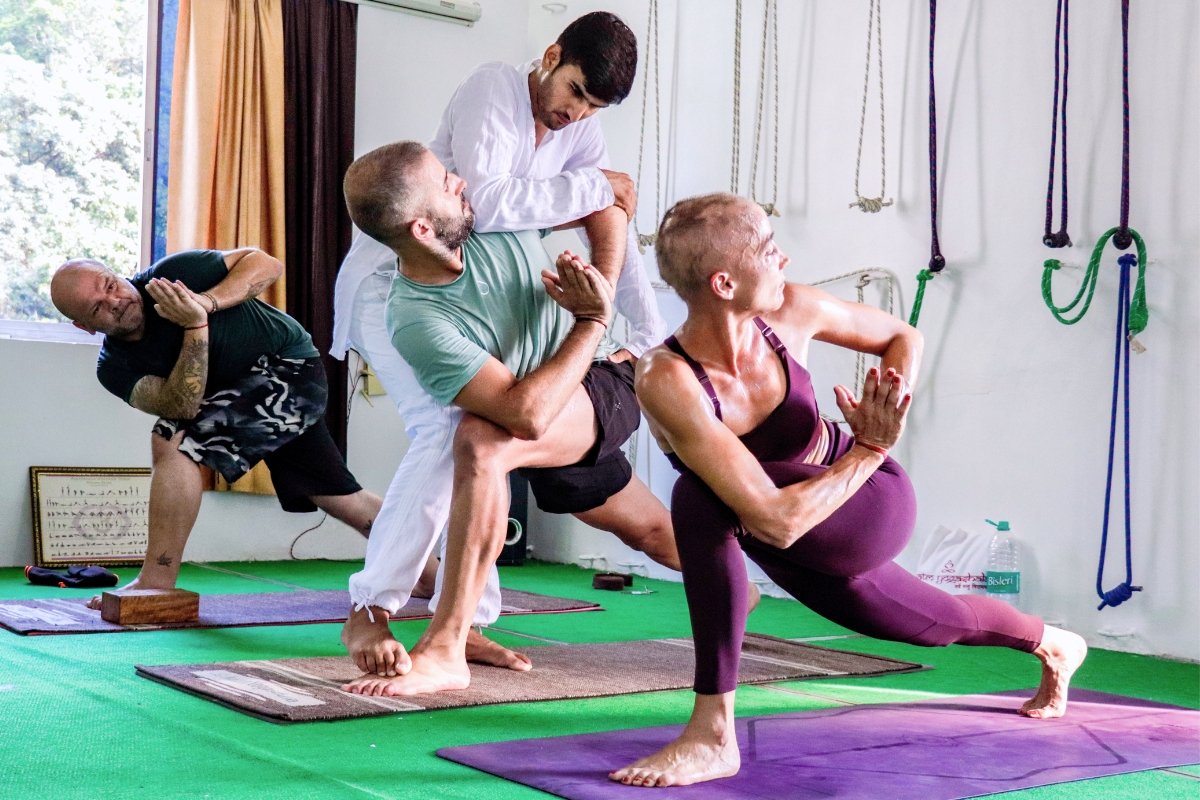
Yoga Teacher Training Courses in Rishikesh, India
Join our Yoga Alliance certified 100 to 500 Hour Yoga Teacher Training in Rishikesh — the Yoga Capital of the World. Learn from expert Indian gurus.
200 Hour Yoga Teacher Training in Rishikesh
Yoga Alliance certified TTC for students who want to become professional yoga teachers.