Yoga and the Moon: Full & New Moon Guide
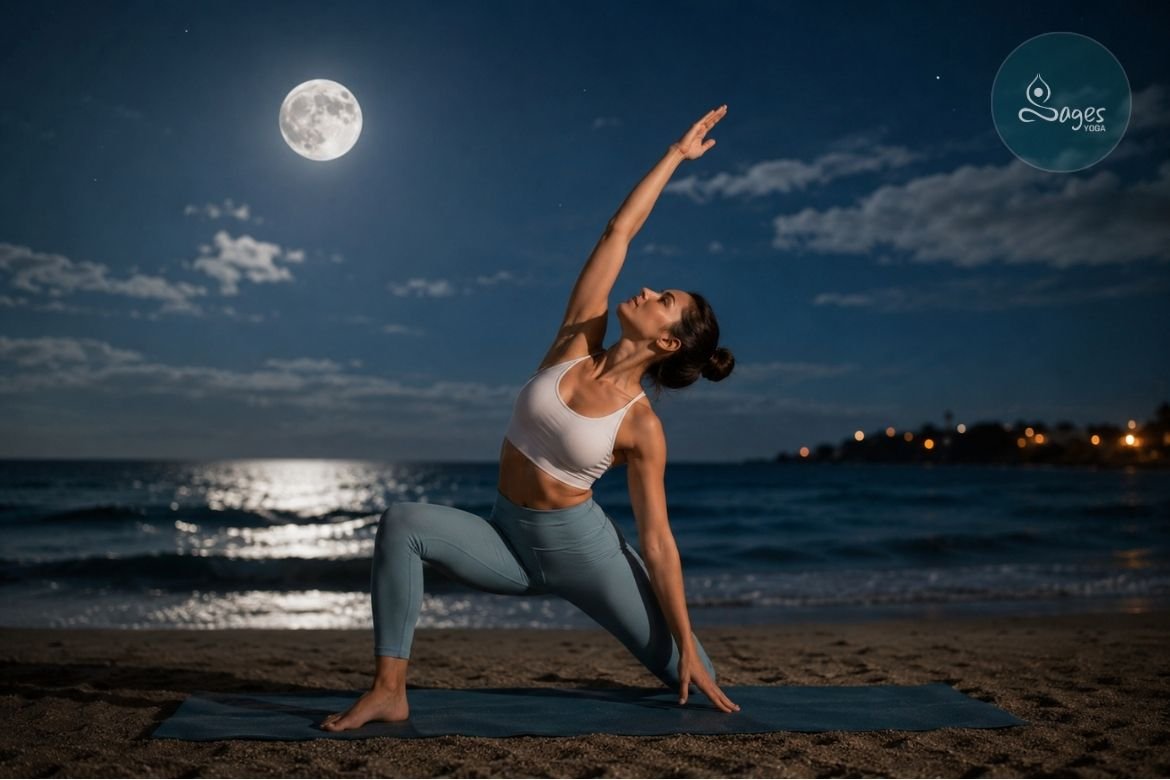
Yoga aligns with lunar cycles through poses like chandrasana (moon pose), ardha chandrasana (half moon), and Chandra Namaskar (moon salutation). On full moon days, practice balancing and expansive poses while avoiding extreme backbends or hot yoga, as connective tissue is more vulnerable. On new moon days, focus on yin, restorative poses, breathwork, and sankalpa setting, while skipping power flows and inversions. Ardha Chakrasana should be avoided by those with lower back injuries, high blood pressure, or vertigo, especially on low-energy lunar days.
Water tides are under the influence of the moon. It covers 71% of the Earth's surface. Water is approximately 60% of your body. The moon also influences our body and mind.
The history of lunar-based yoga in the Hatha Yoga tradition. There is a counterpart of the Surya Namaskar (Sun Salutation), that is Chandra Namaskar (Moon Salutation). It is based solely on lunar energy. The poses, such as the chandrasana (moon pose), are slow and focus on reflexes. The energy of the full moon is open and warm. New moon energy is cooling, in, and restorative.
If you've ever noticed your body feels more flexible or emotionally charged on certain nights, the lunar cycle and the connection of different moon yoga poses with your body.
The Significance of the Moon in Yoga
Yoga practitioners use the phases of the moon to embrace their bodies and yoga practices. The moon alters the body's energy. The yoga practice in line with the moon is a connection with nature. Once you begin to feel the full and new moon energy in your body, you automatically stop pushing through your mat time and start working with the energy of nature.
Prana is the life force that moves upwards, and it coincides with a full moon day. The body feels flexible and energized. The patterns of human sleep change measurably, with reduced deep sleep and earlier sleep onset during a full moon.
The days of the new moon are the days of apana, or the downward-moving energy. It reflects calming and cleansing.
What to do at Full Moon Yoga?
Move with the energy nature provides, not against it. It is not on full-moon nights that a new peak pose should be introduced. Already, your muscles are less tense, and your nervous system is a little higher. Poses that work will channel this energy rather than increase it to uncontrollable levels.
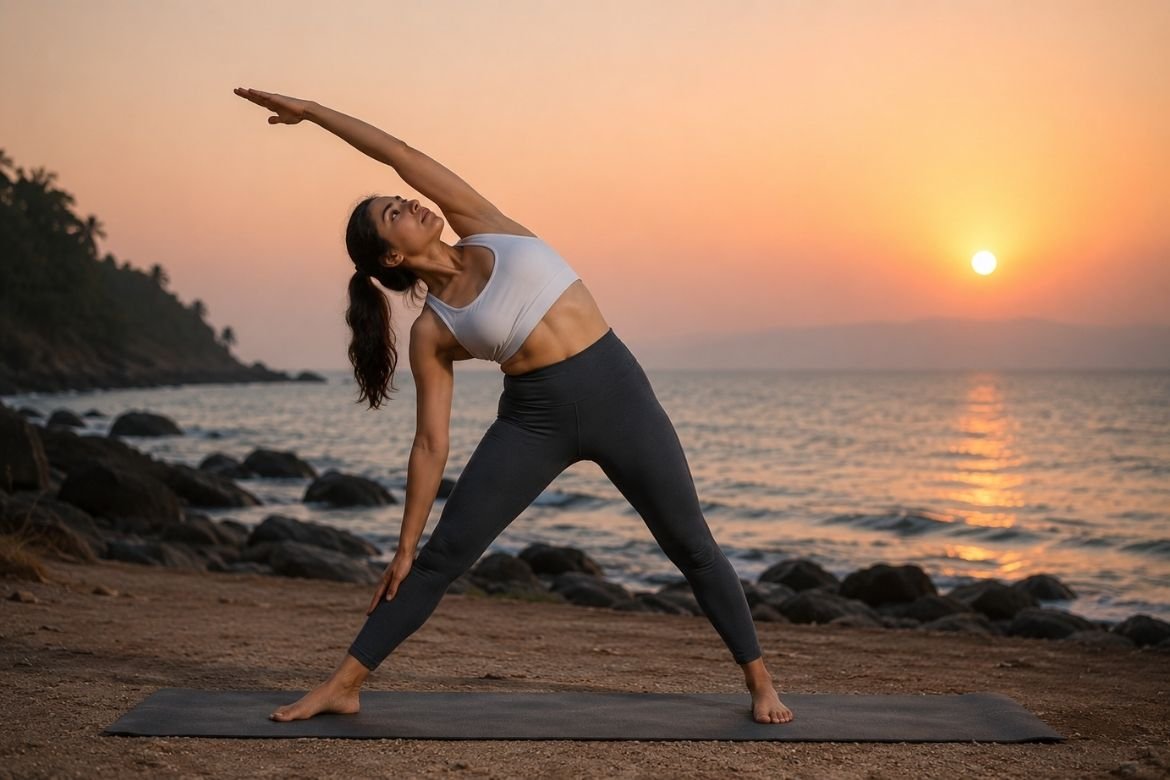
A natural pose would be chandrasana (moon pose). It exposes the side body, stretches the intercostals and hip flexors, and makes you feel expansion rather than imposing it. Ardha kati chakrasana, which is the lateral standing half-moon, is a good complement to this. Still stand tall, one arm raised, lean forward in a lateral arc. Length in at the waist, ground in the two feet. It was a stretch, open, breathable on the side.
Half moon pose benefits that go beyond just flexibility. The pose requests balance, which, of course, slows the overcharged nervous system. It involves the glutes and works the standing leg. When you are on a full moon night, and your mind is a racing whirlwind, it is that single-leg balance that brings you back to your body.
To sequence, lean over:-
- Your opening flow will be Chandra Namaskar (Moon Salutation).
- Balances in standing, such as ardha chandrasana.
- Now restore poses in the second part of your session.
- At least 10 minutes in savasana.
During full moon evenings, consider some minutes of Chandra Bhedana (left-nostril breathing) in advance of class. It stimulates the parasympathetic nervous system and relieves excess pitta.
What You Should Avoid in Full Moon Yoga?
The greatest error practitioners commit on full moon days is to consider the increased energy as a motive to work hard on yoga poses.
This is a phase when your connective tissue is softer. That is like a stretch. On a full moon, stretching ligaments to the point of rupture is a very possible danger, and ligaments do not repair easily.
Avoid:-
- Extreme backbends pushed beyond the comfort zone.
- Devil-take-the-first-ail, when thou art in thy passions sick.
- Hot classes when you already are hot (vata or pita types, note).
- Any pose that involves a lot of force or momentum.
Intense seated twists and ardha vakrasana should be approached cautiously. The pose is not problematic. Twisting aggressively when your body isn't as mobile as it used to be and your control is a little off is where the trouble begins.
What to Do in New Moon Yoga?
The practice of the new moon is reflective—an inward-turning, not passive, experience. It is a time for yin yoga, restful work, pranayama, and meditation rather than an active flow practice.
Base your practice on grounded postures such as forward folds, seated poses, child, pose. The yoga pose that will be helpful here is the crescent yoga pose (low lunge with arms raised), as it offers both grounding and heart-opening benefits without being destabilizing.
Ardha kati chakrasana performed gradually on a new moon is very different from that during a full moon. Slow entry, hold, increased focus on breath. The pose will teach you something about stillness that a frenzied full moon sequence will not.
This is also an ideal time to set sankalpa (intention). In Vedic tradition, the new moon is associated with new cycles, fresh beginnings, and planting seeds for growth. Take 5 minutes to relax at the beginning of your practice, in a comfortable sitting position. Avoid distractions— no phone, no list-making. Simply create a clear, honest statement of what you would like to develop or manifest during the current lunar cycle.
Sequences of the new moon:-
- Begin with Nadi Shodhana (alternate nostril breathing) 5-10 minutes.
- Floating sequence on the floor.
- Add ardha vakrasana, a mild twist of the spine, to enhance the digestive system and parasympathetic system.
- Finish off with yoga nidra rather than savasana.
What not to do in New Moon Yoga?
Do not use anything that produces excess heat or causes the body to swell. Power yoga, fierce vinyasa, peak posing competitions. These exhaust the apana energy accumulated by the new moon.
Ardha chakrasana contraindications are overweight in this case. Overall, Ardha Chakrasana should not be practiced by individuals with lower back injuries, cervical spine problems, high blood pressure, vertigo, or pregnancy. It should be missed even on new moon days by those practitioners who do not have those conditions. The body's downward energy does not align with the full backbend opening demand.
Other things to avoid on new moon days:-
- Powerful inversions (handstand, headstand).
- Fast-paced Kapalabhati pranayama.
- Arm balances that demand great activation and mental acuity.
- Anything that leaves you feeling drained instead of relaxed.
When you are low on a new moon day. Rest is a valid practice of yoga.
Making Moon Yoga Poses a Part of Your Daily Practice
There is no need to start a revolution in your practice to observe the lunar cycle. Start with awareness.
Place a mark where you stand at each practice. Write a basic journal in one month. Record your energy level, emotional level, and poses that feel good. There is a pattern you are likely to notice.
They develop over time. Limit the days leading up to the full moon; flow toward crescent pose, chandrasana yogas, and half moon pose. Days closer to the new moon, switch to floor work, yin holds, and breathwork.
The half moon pose benefits do not accumulate when it is done occasionally. Balance, lateral strength, hip stability, and mental focus cannot be achieved in a single session; rather, they take weeks. The moon provides an inbuilt structure for intelligently practicing and changing all month in a 28-day cycle.
Ardha kati chakrasana is an especially good daily pose, irrespective of the lunar phase. It is safe on most bodies, does not need props, and is less than 60 seconds per side. It loosens the thoracic spine over time and lengthens the quadratus lumborum, which is under long-term tension in most desk workers.
People Read Also : How to Become a Certified Yoga Teacher in India
Conclusion
Gently working with the warmth of the full moon and the silence and grounding influence of the new moon will assist you in selecting poses and breaths that do not fatigue your joints. In the long run, minor variations such as the practice of preferring Chandra Namaskar and relaxing postures on full moon days, or yin, Yoga Nidra, and sankalpa setting around the new moon form an arc of 28 days of practice.
The point is that it will be hard to change quickly; just be consistent, watch your energy, recognize patterns, and employ uncomplicated poses like the half moon pose, ardha kati chakrasana, simple twists, and conscious pranayama as pillars rather than major obstacles. By also respecting contraindications, as in not practicing ardha chakrasana when you have back or blood-pressure problems or on low-energy lunar days, you are making your practice safer and more in tune with itself.
Frequently Asked Questions
Is there any inversion I can make of a full moon?
Yes, when you are established in practice and in your stride. Avoid when emotions are high or when you feel unsteady. Whatever you take to the mat is heightened by full moon energy.
What is the chandrasana?
Chandrasana is a lateral moon that opens the side body. It gives good results during both lunar phases but seems to work particularly naturally during full moon flows when expansion energy is high.
What are the main contraindications for Ardha Chakrasana?
Ardha chakrasana should be avoided in the presence of lower back injury, high blood pressure, disc herniation, glaucoma, or vertigo. Beginners need guidance. Never push on a full moon day.
What are the benefits of the half moon pose for everyday yoga practitioners?
Half moon pose improves lateral hip stability, enhances single-leg balance, and improves focus. Most individuals experience significant balance improvement in 6 weeks with a practice of 3 to 4 times a week.
Can new moon yoga be used with beginners?
Yes. New moon sequences are both slower and restorative, making them suitable for beginners. Accessible starting points include the crescent yoga pose, gentle forward folds, and seated breathwork.
Categories
Our Popular Yoga Courses
Yoga Teacher Training Courses in Rishikesh, India
Join our Yoga Alliance certified 100 to 500 Hour Yoga Teacher Training in Rishikesh — the Yoga Capital of the World. Learn from expert Indian gurus.
200 Hour Yoga Teacher Training in Rishikesh
Yoga Alliance certified TTC for students who want to become professional yoga teachers.